Picture this: a well-known food or beverage brand sponsors a community health walk, funds a school feeding program, or partners with a local entrepreneurship event. It looks generous. It feels like progress. But what if these same gestures are quietly shaping the policies meant to protect us from the very products these companies sell?
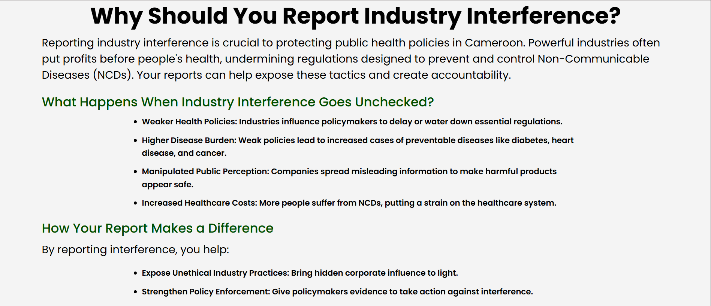
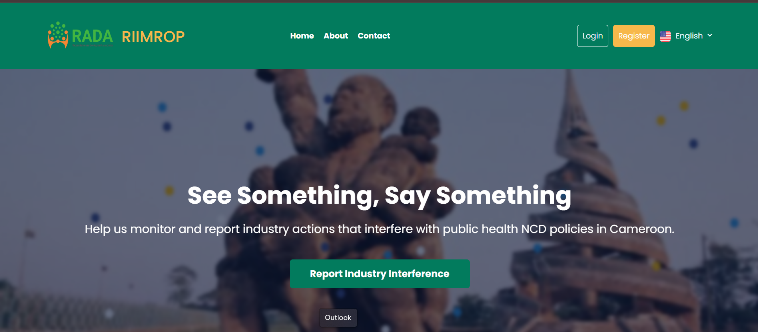
This is the reality RADA is confronting through its Industry Interference Monitoring and Orientation Platform (RIIMROP). Industry interference is not a distant, abstract concept; it’s happening in our communities, in boardrooms and public offices, on our social media timelines, and in the very rooms where decisions about our food and health are made. It refers to the deliberate ways commercial actors work to influence public policy, research, or public opinion to protect their profits, often at the expense of the public’s health.
Between January and March 2026, RIIMROP tracked 24 such actions in Cameroon, moments when corporate social responsibility campaigns, regional partnerships, and strategic communication worked to build public trust for the companies while empowering them to quietly chip away at the evidence and population-based healthy interventions Cameroonians need most such as telling the people that the products they sell, are causing them the very health challenges that they sponsor youth sports events, health events, to claim to avert.
Here’s what makes this especially concerning: much of this influence doesn’t look like interference at all. It looks like a partnership. Like community support. Like good corporate citizenship. But behind many of these gestures is a strong conflict of interest that, when exposed, they resist in boardrooms, public decision-making fora, and amplify privately by influencing policymakers who are exposed to them to delay or weaken policies that the population’s health needs. We are talking about producers of drinks high in sugar, salt, trans fats, and other harmful nutrients harming our children and youthful population but standing. This quarterly report found a pattern of activity concentrated among a handful of major companies, played out largely through digital platforms, shaping how everyday Cameroonians think about food, health, and who’s really looking out for them. A perfect case of areas where you can find covert and indirect interference.
The stakes are real. When commercial interests rather than evidence shape the decisions meant to prevent diabetes, obesity, and cardiovascular disease, it’s ordinary families who pay the price, and most often for generations before action is taken. Tobacco was sold out as a great societal status product, and sponsored health, tournaments like football, etc while quietly arguing against any policies that strengthened the population against their product.
Cameroon does not have to accept this quietly. RADA and over 32 civil society organizations are calling for the adoption and implementation of Healthy Food Policies that prevent the rising burden of chronic health conditions, including hypertension, diabetes, and cancers in Cameroon, including: Front-of-Package Warning Labels and Marketing Restrictions Regulation, Taxation on Sweetened Beverages and Ultra-Processed Foods, tighter conflict-of-interest rules, and continued monitoring through RIIMROP.
Because a healthier Cameroon starts with a simple principle: our health policies should be shaped by evidence, not by boardrooms and industry.
Read the visualized full report here: