Global Week for Action on Non-communicable Diseases (NCDs) 2026
“The biggest public health victories are often invisible. When prevention works, a heart attack never happens, a stroke never occurs, and a family never loses a loved one too soon,” said Ferdinant M. Sonyuy, CEO of RADA.
The countdown to the Global Week for Action on non-communicable diseases (NCDs) is fast approaching, running from the 31st of August to the 04th of September, a chance to stand in solidarity with the millions of people living with NCDs, including heart disease, cancer, diabetes, and chronic respiratory conditions.
According to the World Health Organization, NCDs account for 74% of deaths yearly, while reports from Cameroon’s Ministry of Public Health show that NCDs accounted for about 55% of deaths in 2025. While NCDs account for a large share of the global health burden, they continue to receive insufficient attention and funding. This week is an opportunity for us to raise our voices collectively to call for stronger prevention, equitable access to treatment, and the care people with NCDs need.
WHEN
31st August to 4th September
8:00 am- 4:00 pm
WHERE
Bamenda, Cameroon, hybrid (physical and virtual event)
More information
NCDs affect millions of people in the world today, but together we can change that by taking action on NCDs for prevention and treatment. Be part of our event by:
Be part of our workshop on the 02nd of September from 9:00 am to 10:00 am at our main office at Way in Mobile-Nkwen, Bamenda, 3rd floor, Quiferou building
Engage with our social media campaign daily. Follow us on our different social media platforms
Facebook: @recdeva
Instagram: @recdeva
Twitter: @recdefcameroon
LinkedIn: Reconciliation and Development Association (RADA)
YouTube: Reconciliation and Development Association (RADA)
TikTok: @recdevcameroon
Be part of our media tour on Anco Radio, FM 97.5. The time and date will be communicated on our social media handles
When “Goodwill” Comes with Strings Attached: What RIIMROP Uncovered About Big Food’s and Beverage Playbook in Cameroon, January- March, 2026
Picture this:a well-known food or beverage brand sponsors a community health walk, funds a school feeding program, or partners with a local entrepreneurship event. It looks generous. It feels like progress. But what if these same gestures are quietly shaping the policies meant to protect us from the very products these companies sell?
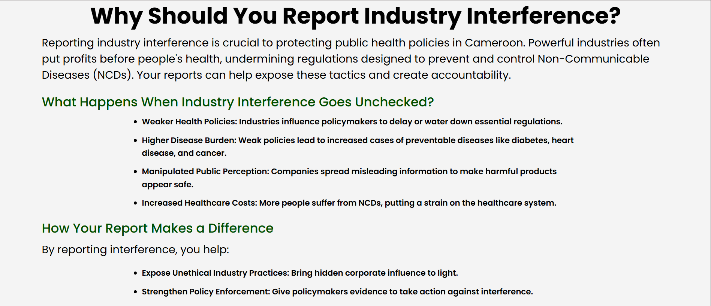
This is the reality RADA is confronting through its Industry Interference Monitoring and Orientation Platform (RIIMROP). Industry interference is not a distant, abstract concept; it’s happening in our communities, in boardrooms and public offices, on our social media timelines, and in the very rooms where decisions about our food and health are made. It refers to the deliberate ways commercial actors work to influence public policy, research, or public opinion to protect their profits, often at the expense of the public’s health.
Between January and March 2026, RIIMROP tracked 24 such actions in Cameroon, moments when corporate social responsibility campaigns, regional partnerships, and strategic communication worked to build public trust for the companies while empowering them to quietly chip away at the evidence and population-based healthy interventions Cameroonians need most such as telling the people that the products they sell, are causing them the very health challenges that they sponsor youth sports events, health events, to claim to avert.
Here’s what makes this especially concerning: much of this influence doesn’t look like interference at all. It looks like a partnership. Like community support. Like good corporate citizenship. But behind many of these gestures is a strong conflict of interest that, when exposed, they resist in boardrooms, public decision-making fora, and amplify privately by influencing policymakers who are exposed to them to delay or weaken policies that the population’s health needs. We are talking about producers of drinks high in sugar, salt, trans fats, and other harmful nutrients harming our children and youthful population but standing. This quarterly report found a pattern of activity concentrated among a handful of major companies, played out largely through digital platforms, shaping how everyday Cameroonians think about food, health, and who’s really looking out for them. A perfect case of areas where you can find covert and indirect interference.
The stakes are real. When commercial interests rather than evidence shape the decisions meant to prevent diabetes, obesity, and cardiovascular disease, it’s ordinary families who pay the price, and most often for generations before action is taken. Tobacco was sold out as a great societal status product, and sponsored health, tournaments like football, etc while quietly arguing against any policies that strengthened the population against their product.
Cameroon does not have to accept this quietly. RADA and over 32 civil society organizations are calling for the adoption and implementation of Healthy Food Policies that prevent the rising burden of chronic health conditions, including hypertension, diabetes, and cancers in Cameroon, including: Front-of-Package Warning Labels and Marketing Restrictions Regulation, Taxation on Sweetened Beverages and Ultra-Processed Foods, tighter conflict-of-interest rules, and continued monitoring through RIIMROP. Because a healthier Cameroon starts with a simple principle: our health policies should be shaped by evidence, not by boardrooms and industry.
Is There No Hope for Children Living with Type 1 Diabetes?
Fueling Our Strength: A Picnic of Champions Cohort II
For many families, a diagnosis of Type 1 Diabetes (T1D) can feel overwhelming due to several factors. Daily insulin injections, constant blood glucose monitoring, misconceptions from society, and the emotional burden of living with a lifelong condition often leave children and caregivers asking a difficult question: Is there hope?
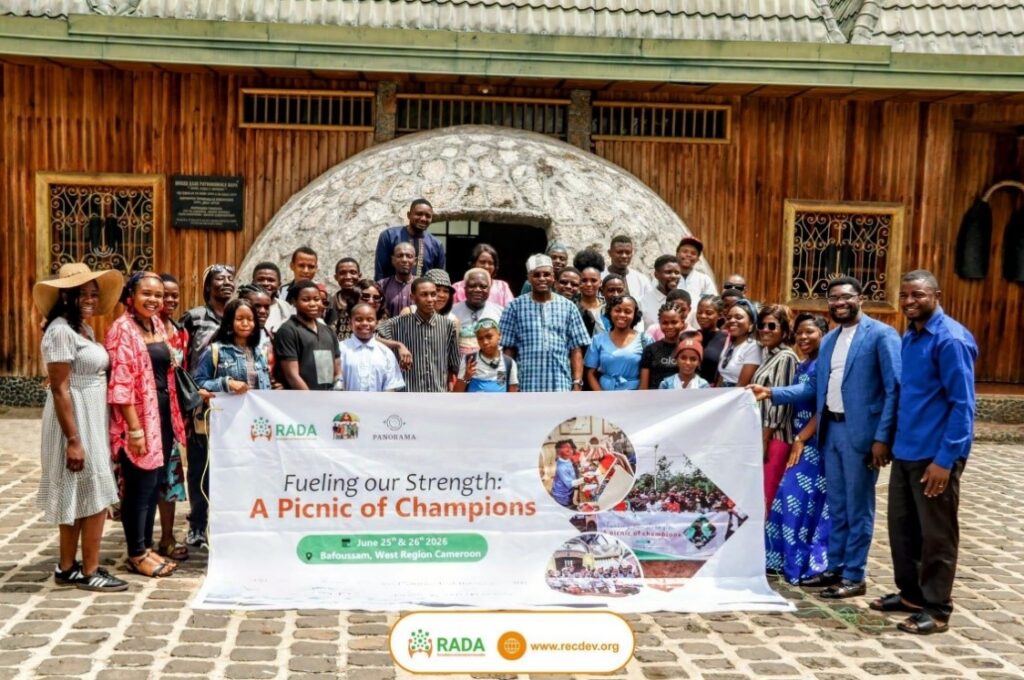
Children and Caregivers at Chefferie de Bapa
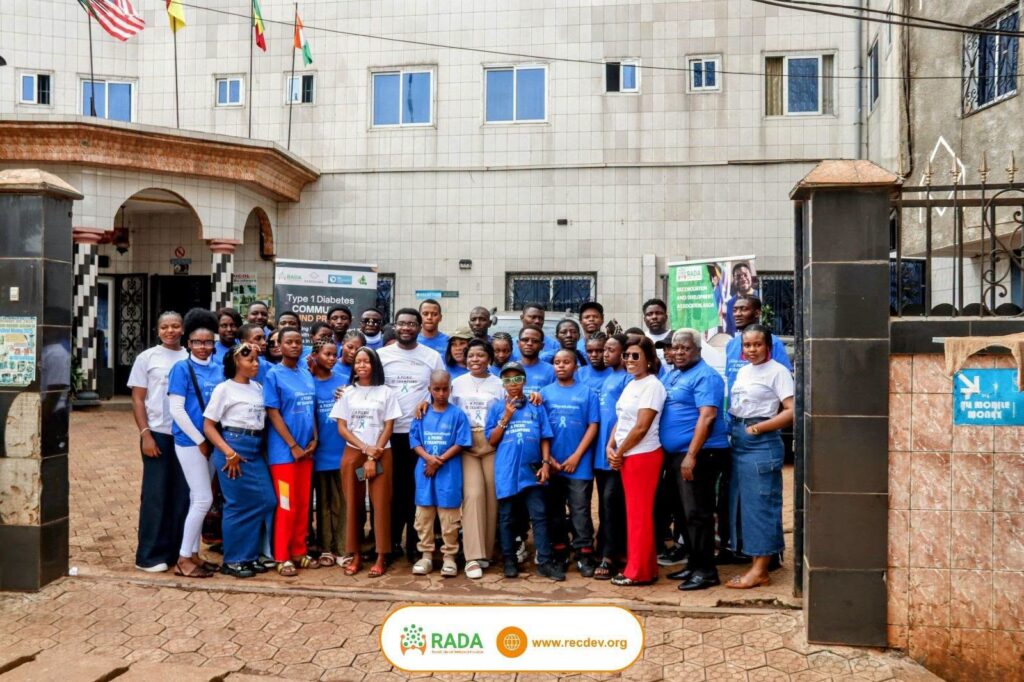
The Reconciliation and Development Association (RADA) answered that question with a resounding yes during its two-day Type 1 Diabetes Picnic of Champions, held in Baffoussam from the 25th to the 26th of June 2026 under the theme “Fueling Our Strength: A Picnic of Champions.” Organized with technical and financial support from Panorama Global through the Type 1 Diabetes Community Fund Project, the picnic brought together children and adolescents living with T1D and their caregivers for two days of learning, encouragement, recreation, and healing.
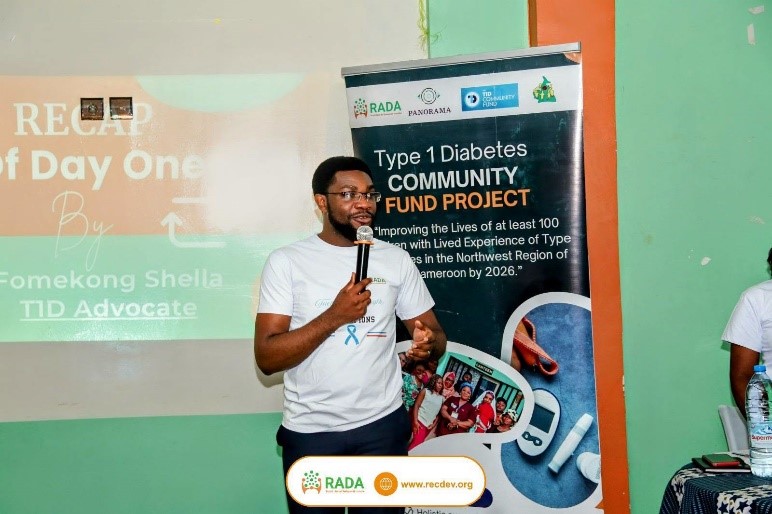
Mr. Ferdinant Sonyuy facilitating on “Managing T1D as a Family“
More than just a recreational outing, the picnic created a safe space where families discovered that they were not alone on their journey. Through diabetes education sessions, psychosocial support, peer interaction, and family-centered discussions, participants gained practical knowledge and renewed confidence to manage Type 1 Diabetes.
The picnic combined wellness and learning through morning fitness activities, routine blood glucose monitoring, diabetes conversations, nutrition education, emotional storytelling, art therapy, and family engagement sessions. These activities equipped both children and caregivers with practical skills while addressing the emotional and psychological challenges that often accompany the condition.
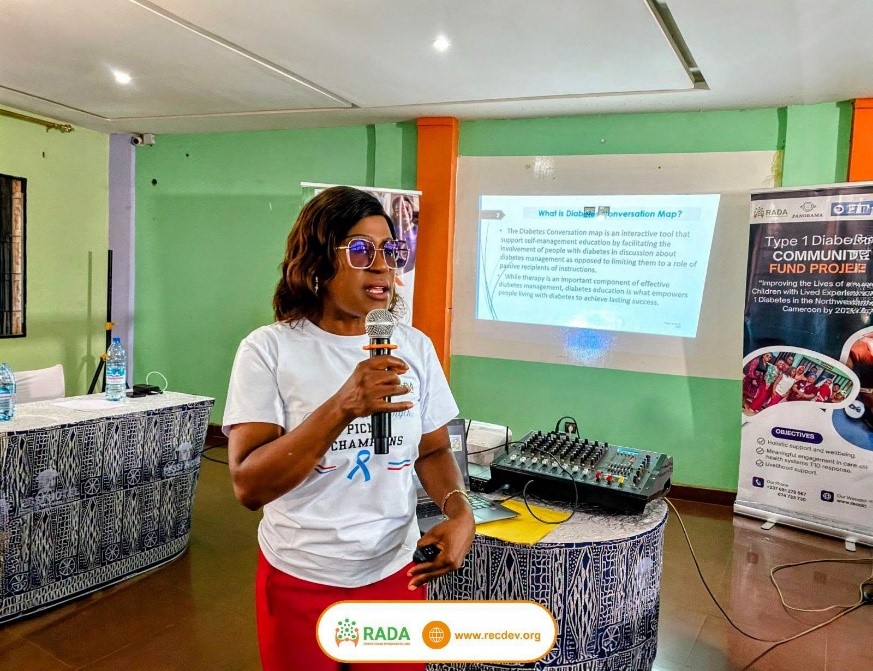
Mme. Nfor Claudette facilitated the session on “Diabetes Conversation Map”
One memorable highlight was an excursion to the Chefferie de Bapa museum and TAGIDOR Resort, where the children experienced the region’s rich cultural heritage and enjoyed moments of fun and relaxation. Beyond recreation, the outing reminded them that having Type 1 Diabetes does not limit their dreams or define who they are. For many participants, the greatest impact came from connecting with others who understood their daily experiences. Sharing personal stories, challenges, and victories fostered friendships, reduced feelings of isolation, and built a stronger support network among families. Reflecting on his experience, the Type 1 Diabetes Champion Gangbabga Nubela shared: “The new things I’ve learned through this picnic are that your feeding manner enhances the way you live with diabetes, and being together helps overcome our challenges.” His testimony echoed the experience of many participants who left the picnic with greater confidence, practical knowledge, and renewed hope for the future.
Children, Caregivers and RADA Team
Through its Diabetes Support Program, RADA intends to continue strengthening these support systems by raising awareness, building the capacity of families and healthcare providers, promoting peer support, and creating opportunities for children and young people living with Type 1 Diabetes to thrive. Learn more about RADA’s Diabetes Support Program and how you can support children Living with Type 1 Diabetes by Visiting Here to become a member.
Prepared by: Bidmia Christabel Bobnyonga.
Spotlight on Impact: Celebrating NCD Champions at the 1st National Symposium and Roundtable for Action on Chronic NCDs in Cameroon.
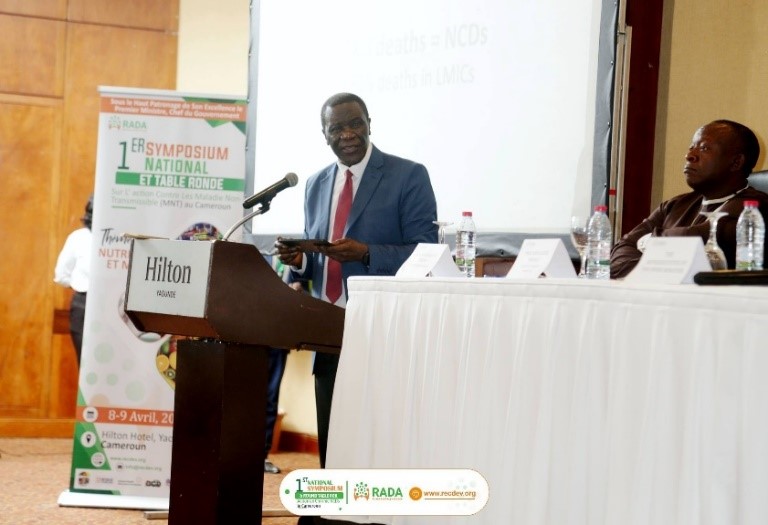
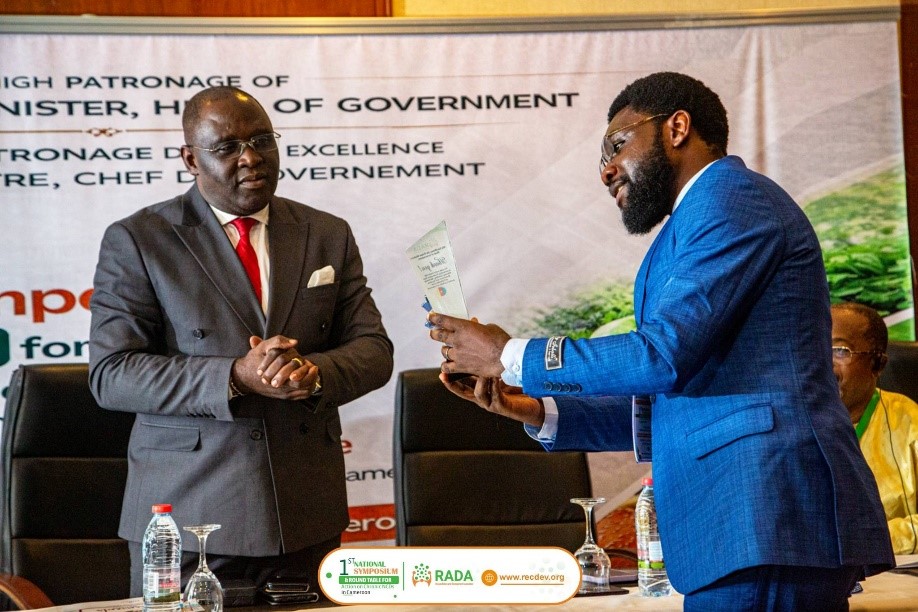
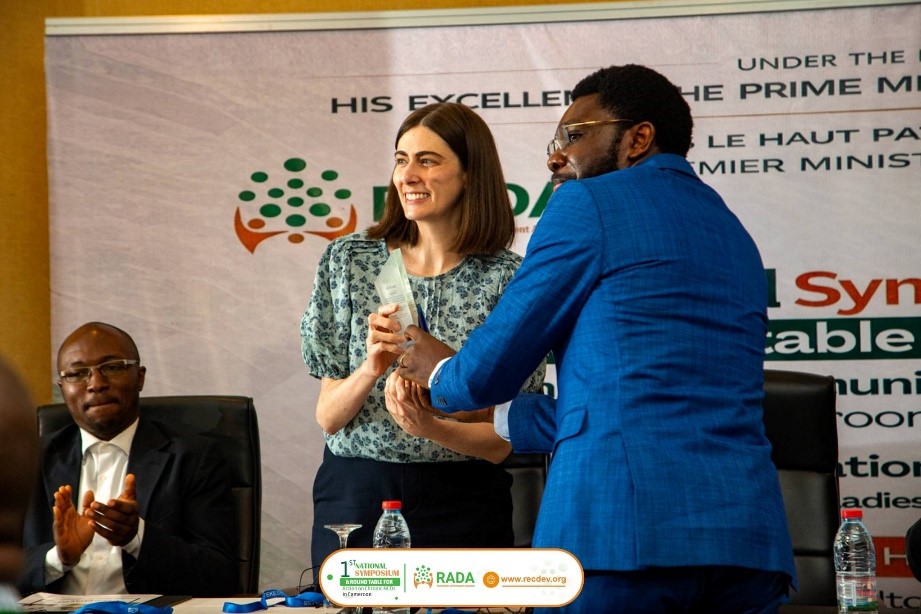
April 9, 2026, was not only the closing ceremony of the 1st National Symposium and Roundtable for Action but also a moment to recognize champions who have supported RADA’s advocacy for the adoption of Healthy Food Policies in Cameroon. During this ceremony, one of the most defining and memorable moments of the 1st National Symposium and Roundtable for Action on Non-Communicable Diseases (NCDs) in Cameroon. This important segment was dedicated to recognizing outstanding individuals and institutions whose leadership, commitment, and contributions continue to shape Cameroon’s response to NCDs, particularly in policy development, research, advocacy, and health financing. The ceremony served not only as a moment of appreciation but also as a symbol of the collective effort required to combat the growing burden of NCDs in the country.
Among the distinguished honorees was Professor Jean Claude Mbanya, President of the Scientific Committee and chair of the Cameroon NCD Alliance. He was recognized for his exceptional contributions to scientific research and his enduring mentorship of young professionals in public health. His leadership has been instrumental in advancing evidence-based approaches to addressing NCDs in Cameroon. The inscription on his award read: “RADA, thank you for your enduring and endearing mentorship of young people in public health, and specifically for your active leadership in promoting Front-of-Package Warning Labelling, Marketing Restrictions, and Taxation of Unhealthy Food Products policies in Cameroon. Your continued and visible leadership will serve as an inspiring model for the region and the world.” This recognition explained the vital role of research, data, and mentorship in shaping effective and sustainable public health interventions.
Also honored was the Honorable Njume Peter, Head of the Parliamentary Caucus for Health Financing. He was celebrated for his unwavering commitment to strengthening health financing systems and supporting key legislative reforms aimed at improving the population’s health outcomes. His efforts have played a critical role in advancing policies, including fiscal measures such as the taxation of unhealthy products, highlighting the importance of parliamentary engagement in public health advancement.
In recognition of high-level of government commitment, a prestigious award was presented to His Excellency, the Prime Minister, Head of Government. This award acknowledged the government’s leadership in promoting preventive health policies and supporting initiatives aimed at reducing the burden of NCDs in Cameroon. The inscription on the award was: “Thank you for your active leadership in promoting Front-of-Package Warning Labelling, Marketing Restrictions and Taxation of Unhealthy Food Products policies in Cameroon. Your continued and visible leadership will serve as an inspiring model for the region and the world.”
An additional award was presented to Mr. Ihyong III, the Representative of the Prime Minister at the symposium, in recognition of his active participation and support for the initiative. His award carried a similar message of appreciation: “Thank you for your active leadership in promoting Front-of-Package Warning Labelling, Marketing Restrictions and Taxation of Unhealthy Food Products policies in Cameroon. Your continued and visible leadership will serve as an inspiring model for the region and the world.”
In addition, the symposium recognized the invaluable contribution of international partners through an award presented to Nicole Ide, representing Resolve to Save Lives. The recognition reflected the organization’s strong technical and financial support, via global leadership in advancing public health interventions in Cameroon. The inscription on the award read:“Thank you for your strong leadership, commitment, and support for the attainment of Front-of-Package Warning Labelling and Marketing Restrictions in Cameroon, advancing public health to save lives. Your leadership will continue to serve as an inspiring model to the world, and we are grateful.”
Overall, the award ceremony served as both recognition and motivation. By honoring leaders across academia, government, and international organizations, the symposium reinforced the importance of multi-sectoral collaboration in addressing NCDs.
Beyond celebrating individual achievements, the ceremony highlighted a shared national and global commitment to advancing effective policies, strengthening health systems, and promoting healthier environments. It stood as a powerful reminder that sustained leadership, strong partnerships, and bold action are essential to building a healthier future for Cameroon.
By: RADA’s Communication Team
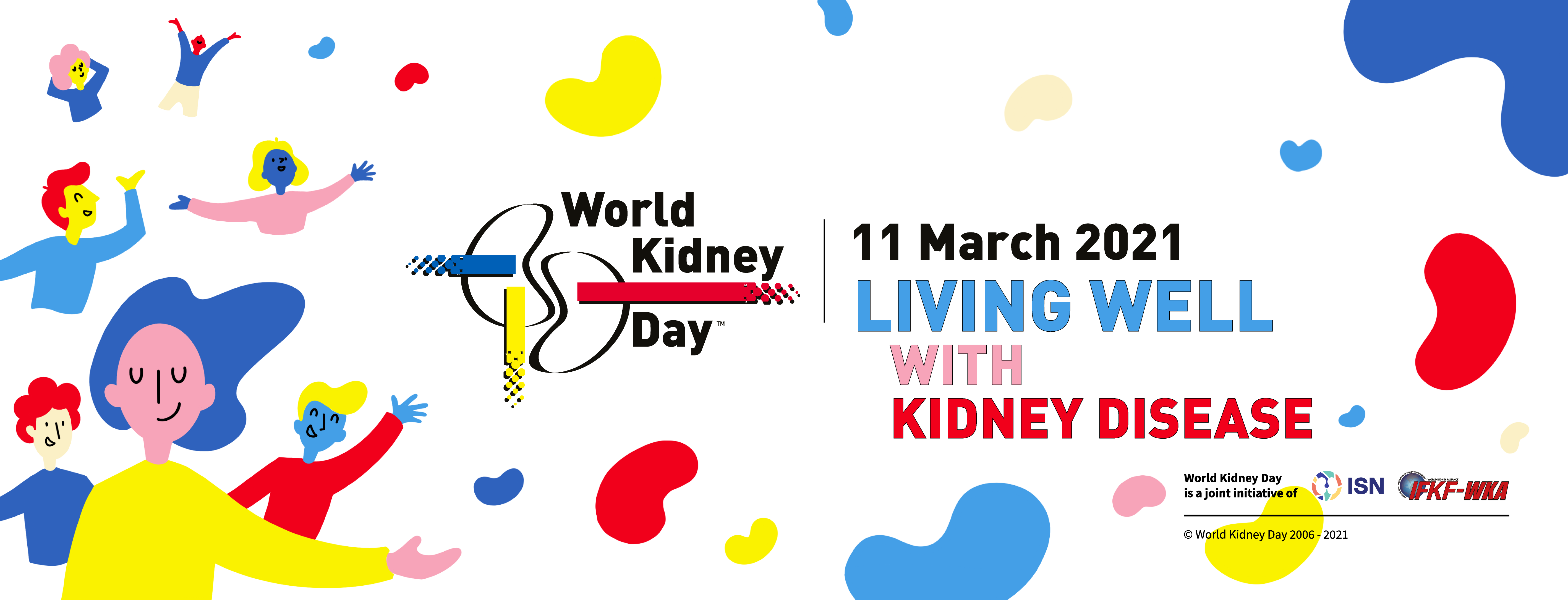
WORLD KIDNEY DAY – a look at your kidney.
Kidney disease is the inability of the kidneys to filter blood as they should.
A joint initiative conceived a World Kidney Day of the International Society of Nephrology and the International Federation of the Kidney Foundation. It started on the 2nd of March 2006 with 66 countries participating.
The purpose of this day is to raise awareness on the importance of the kidneys to our overall health and to reduce the frequency and impact of kidney disease and its associated health problems worldwide.
The theme for this year, 2021, is: “LIVING WELL WITH KIDNEY DISEASE,” to increase education and awareness about effective symptom management to improve the health of people living with Kidney Disease to improve the quality of life and empowering participation in their overall well being and citizenry.
I have come across so many people living with kidney disease like an Uncle of mine, who goes through a lot, week after week to survive, requiring Hemodialysis, a treatment whereby blood is removed from the body and filtered through an artificial membrane called a dialyzer, or artificial kidney. Then the filtered blood is returned to the body. In this process, wastes and water are filtered from your blood, as your kidneys did when they were healthy. Hemodialysis helps control blood pressure and balance important minerals, such as potassium, sodium, and calcium, in your blood.
He goes through this once or twice a week, depending on the condition to filter blood complemented with blood transfusion. He also lives on essential medication, which requires a lot of money. The majority of people living with Kidney Disease in Cameroon and other low- and middle-income countries end up dying for several reasons you can already perceive. Cost, access to quality care, etc. How many people can sustain this?
Now, what are the RISK FACTORS OF KIDNEY DISEASE? The following conditions or behaviors are the risk factors for developing kidney disease. They include Obesity, Hypertension, Smoking, and Diabetes. If you have been to the hospital or not, yet, you have any of these aspects in your life, you are at risk of kidney disease. Action needs to be taken to prevent Kidney disease and its complications. This includes practicing or ensuring the following:
Avoid smoking
Limiting excessive consumption or misuse of alcohol
Eating healthy fruits and vegetables as much as you can in your diets.
Drinking at least 2 to 3 liters of water per day
Limiting the consumption of salt (avoid adding salt to your diet)
Frequent emptying of the bladder (Don’t wait until you are too pressed to relieve yourself)
Regular exercise (15-30 minutes daily won’t kill you. It will save you and help you become smarter)
Frequent check on blood pressure and blood sugar. (This is now being done in many health facilities, some for free or at 500 FCFA such as in CBC Health Facilities)
The tips above are handy if you don’t yet have kidney disease. But if you are already a person living with Kidney disease, or know one, feel free to do all the above in addition to the following: Seek to belong to a patient support group for Kidney disease or other NCDs such as your hospital-based clinic groups for psychosocial and other peer or professional support.
Take care of yourself if you are a person living with Kidney disease.
Join our advocacy group for People Living with Chronic NCD Conditions called Our Views Out Voices. We work together to advocate the government and other communities for better care to PLWNCDs (Contact us on WhatsApp at +237674733730 for modalities to join).
Seek as much help as you can to cover the cost of care.
Pray.
Lastly and also, most importantly, avoid all the risk factors so that you can be safe from the extreme severities of complications that come with continuous exposure to salt, alcohol, smoking, stress, and others mentioned.
Declaration: This article was co-authored by Mabel T. And Ferdinant M. S.
The Cameroon Civil Society NCD Alliance Launches Report on COVID-19 and NCDs Response in Cameroon
Jean Claude Mbanya, MD, PhD, MRCP (UK), FRCP (London), FTWAS Chair, CACSNA
Another Service Call at the Africa NCDs Network
RADA was elated that the CEO, was recently elected as Chair of the African NCDs Network. “This means that together with the 5 member team, from West, Central, Southern, East and francophone Africa, the ANN has a timeline to be established by December 2020” said Ferdinant.
The Africa NCDs Network (ANN)
He added that “It is team work. We have these regional representatives and an Interim Advisory Board all working together to establish the Network”. The Africa NCDs Network is an advancement in the effort to make NCDs are priority everywhere. The Vision of the ANN to “Make NCDs a priority in the African Continent” by advocating for NCD prevention and control in the African towards universal health access, affordability and risk factor mitigation.
Ferdinant also indicated that the African Union, African sub regional economic blocks as well as regional partners and stakeholders are the key partners to make policies that will support Africa to hold up to the global NCD burden come to realization.
NCDs currently are responsible for 41 million deaths each year; representing about 70% of annual global deaths. 85% of the premature deaths occurring in Low and middle income countries partly because of limited access to care, and increasing prevalence of the risk factors of tobacco use, unhealthy diets, physical inactivity, alcohol misuse and pollution. The Major categories of NCDs responsible for this catastrophe include Cardiovascular Conditions, Cancers, Diabetes, Chronic Respiratory Disease and Mental Disorders. The key risk factor driving these are largely due to increasing urbanization, globalization and demographic aging.
More about NCDs on: https://www.who.int/news-room/fact-sheets/detail/noncommunicable-diseases
Follow the ANN at: https://twitter.com/AfricanNCDsNet
RADA features in One Young World News!
In the midst of new challenges, OYW Ambassadors continue to display leadership and innovation in their communities. Among Ambassadors who have launched new initiatives, the CEO of RADA has featured in two main weekly articles of One Young World.
The first being the Community mutual Aid crisis response initiative, linking those in need of assistance with volunteers who want to assist, and the second being his role in a Youth Webinar
Session 2: The Future is Now! Youth, NCDs, and the COVID-19 Pandemic organized by the CORE Group NCDs Interest Group- HERE
CORE Group Webinar on Youth Focused NCD Accountability Frameworks – HERE
The team behind the scenes of all the work done in RADA in planning session
RADA in Collaboration with the Cameroon CS NCD Alliance organizes Panel Discussion and Press Briefing
SUMMARY
OF MESSAGES:
We all are accountable for our actions and responsible for our
environment through good policies.
Preventing NCDs makes perfect
economic sense.
NCDs are slow in
progression, a silent pandemic. NCDs kill and everyone is at risk.
It’s our duty to sensitize
the public on the existence and dangers of NCDs and their risk factors
NCDs are a leading cause
of poverty in many countries and should be prioritized in ours too.
Nessa Mbatu, Ferdinant M. and Claudette N.
The global week for Action on NCDs is aimed at reawakening people on the presence of NCDs. The action week is in its third year and the theme for this year was ACCOUNTABILITY. RADA Cameroon in collaboration with the Cameroon NCD Alliance, organized a panel discussion\media briefing amidst several other activities under the umbrella national theme “Raising Attention, Promoting Accountability on NCDs at local and national levels in Cameroon”.
This panel discussion was to inform and educate the public on NCDs through the media. This event was attended by a total number of 35 persons, with 13 media houses represented to cover the event. The panel discussion started at 10:30am. This was a late start due to the power failure which hindered the early start of the discussion. The panelist on board for the discussion where, Mr.Ferdinant Mbiydzenyuy the CEO of RADA/SG of the Alliance, Madam Claudette the North West Delegation of Health, Focal Person for NCDs , Madame Relindis, the Chief of Bureau Health for the Health District and Madame Mbatu Nessah a youth advocate and representative from Value Health Africa. The Panel was moderated by Irene Mofor, a young Advocate for NCDs. The panelist present for the discussion were of diverse backgrounds so as to be able to answer the certain question form their various field of understanding. Due to the crisis that was prevailing in the region, the person living with NCDs who was invited to the panel was unable to get a taxi to arrive on time. Also, the Person living with Kidney Disease who is a Journalist and was invited to moderate, was unable to come as she was unwell.
Recommendations by/To RADA and the CACSNA after the session:
Youths should take up the responsibility to go out in to the public and sensitize the people on the risks associated with NCDs, the various risk factors and how to manage and control them.
Government should implement a policy ban on the sales of tobacco, sweet drinks and alcohol especially in student environments.
There should be an improvement in specialty care given to persons living with cancer, stroke, diabetes and NCDs in general.
RADA should come up with programs that will help facilitate the fight against NCDs in the country.
As individuals, it is our duty to be aware of the existence of NCDs and work to prevent and control it.
Cross Section of Staff of RADA
To conclude, we all know that NCDs are not Human friendly and they are not biased they do not look at how rich you are or how poor you are nor do they look at how tall and short you are. They affect each and every one of us. Statistics shows that we are truly living in a generation that is more likely to die before their parents due to the risk of NCDs. So, we have to take action right now to fight against the spread of NCDs. Let stand together and fight this common cause in other to save our future generations to come. Health is wealth.
A detailed report with speakers specific comments to Media is here:
Global Week of Action on NCDs- 2020: Raising Attention, Promoting Accountability on NCDs at Local and National levels in Cameroon
Theme-2020: Accountability
What is the Global Week of Action for NCDs?
NCDs are currently the #1 cause of death and disability in the world, and the burden is disproportionately severe in low- and middle-income countries, where four out of five people with an NCD live. The Global Week for Action on NCDs is organized by the NCD Alliance global and aims to unite the NCD movement each year under a specific theme, concentrating our combined efforts with the aim of reducing the NCD burden globally and increasing health and equality. Join the movement!
Under the banner of “Raising Attention, Promoting Accountability on NCDs at Local and National levels in Cameroon” The Cameroon CS NCD Alliance will be mounting the national stage with activities to raise awareness on NCDs and the need for accountability regarding desired prevention and control SDG targets. The theme for this year’s Week of Action on NCDs is “Accountability”. Activities will put persons living with NCDs at the center of essence for the Week’s action.
Social Media Activities by all members
Inclusive games at the Baptist Center by CBCHS
Advocacy visits to Mayor, and MoH by CBCHS
Radio Talk shows by CBCHS, RADA, and C3T
Panel Discussion by RADA
Tweet Chats by RADA
Interactive online Q&A on NCDs by RADA
Zoom Conference – in Collaboration with CORE Group by RADA
Patient meeting – by CBCHS
Press briefing /Conference by RADA and C3t
Health Talks in Churches by CBCHS
Publication of statements by all members
NCD Tracts sharing at a Major market by C3t
Zoom Webinar by Rural Doctors
See the full time table of Activities below and dates to participate.
SN
Activity
Dates
Organization(s) i/c
1
Disseminate messages on social media (Contribute to ‘Voices of Change’; Share ‘Voices of Change’ quotes, champion quote cards, info graphics, video messages or key messages through social media using the harsh tag, #ActOnNCDs.)
September 7-13).
All Member organizations
2
Organise inclusive fun games at the Baptist Centre in Bamenda
Saturday, September 12
CBCHS
3
Local Council Advocacy visit
September 9
CBCHS
4
Visit to the radio for a Radio program (Radio Talk with Young NCD Advocates)
September 8/September
CBCHS/RADA
5
Organise a meeting with Cancer Survivors in view of charting a path for the creation of Patient Advocacy Group for Persons living with cancer and Survivors of cancer
CBCHS
6
Publish campaign activities on member newsletters including the “NCD Voice Newsletter” and “Radates” are in view.
September 13- 14th
CBCHS/RADA
7
Health Talks in Churches
September 13
CBCHS
8
Statements from member organizations will be issued on media (All Associations)
Full Week
All Members
9
The Alliance will also issue a Statement on media on the global Campaign
September 9th – 13th
CACSNA Secretariat
10
Sensitization campaign through traditional media including Magic FM, Radio Tiemeni Siantou(RTS), The Post and Le Messager
September 7-13th
C3T,
11
Field visit with Media, CACSNA Team members in Yde, PLWNCD to sensitize population on the various NCDs followed by the distribution of hydro-alcoholic gels and Flyers on NCDs at Mvan neighbourhood at the level of travel agencies.
September 8th 2020 at 14 Pm
C3t
12
Two 2- Advocacy visit to the authorities: Le Sous Directeur de la lutte contre les MNTsLe Directeur de la Promotion de la Santé ou Sous Directeur de la Santé MentaleDélégué régional de la Santé Publique pour le Centre
(We encourage members in Yde to partake N.B use your masks along).
September 10-11, 2020
C3t
13
Panel discussion/ Press Conference, to discuss the problem of NCDs, the Alliance’s work on NCDs in collaboration with other partners that will be present in Bamenda and possibly, Yaoundé. (RADA,). Topic: “Accountability on NCDs”
Friday 11th
RADA
14
Zoom Webinar with CORE Group partners: “Youth Leaders Taking Action: Developing an NCDs-Focused Accountability Framework.”
Sept. 9, 2020
RADA
15
Tweet Chart with Nigerian Partners
September 7, 2020
RADA
16
Online Interactive Session on “Accountability on NCDs” with RADA CEO.
Sept. 13, 2020
RADA
17
Zoom conference for health care providers in rural areas to discuss their experiences and current actions taken by stakeholders in supporting persons living with NCDs in the context of COVID-19
TBD
Rural Doctors
About the Theme of 2020
Governments have committed to many NCD targets through the United Nations (UN), such as World Health Organization (WHO) NCD targets and the Sustainable Development Goals (SDGs). Accountability mechanisms for NCDs that are currenetly in place can be strengthened by independent civil society-led action, especially at the local and national level. We can all help ensure that commitments made translate into targets met, to turn back the tide on the current NCD epidemic. We’ve seen through COVID-19 the devastating effects of neglect – it’s time to stop making the same mistake with NCDs!- from trade to livelihoods and ultimately, development. (Adapted from NCDA website).