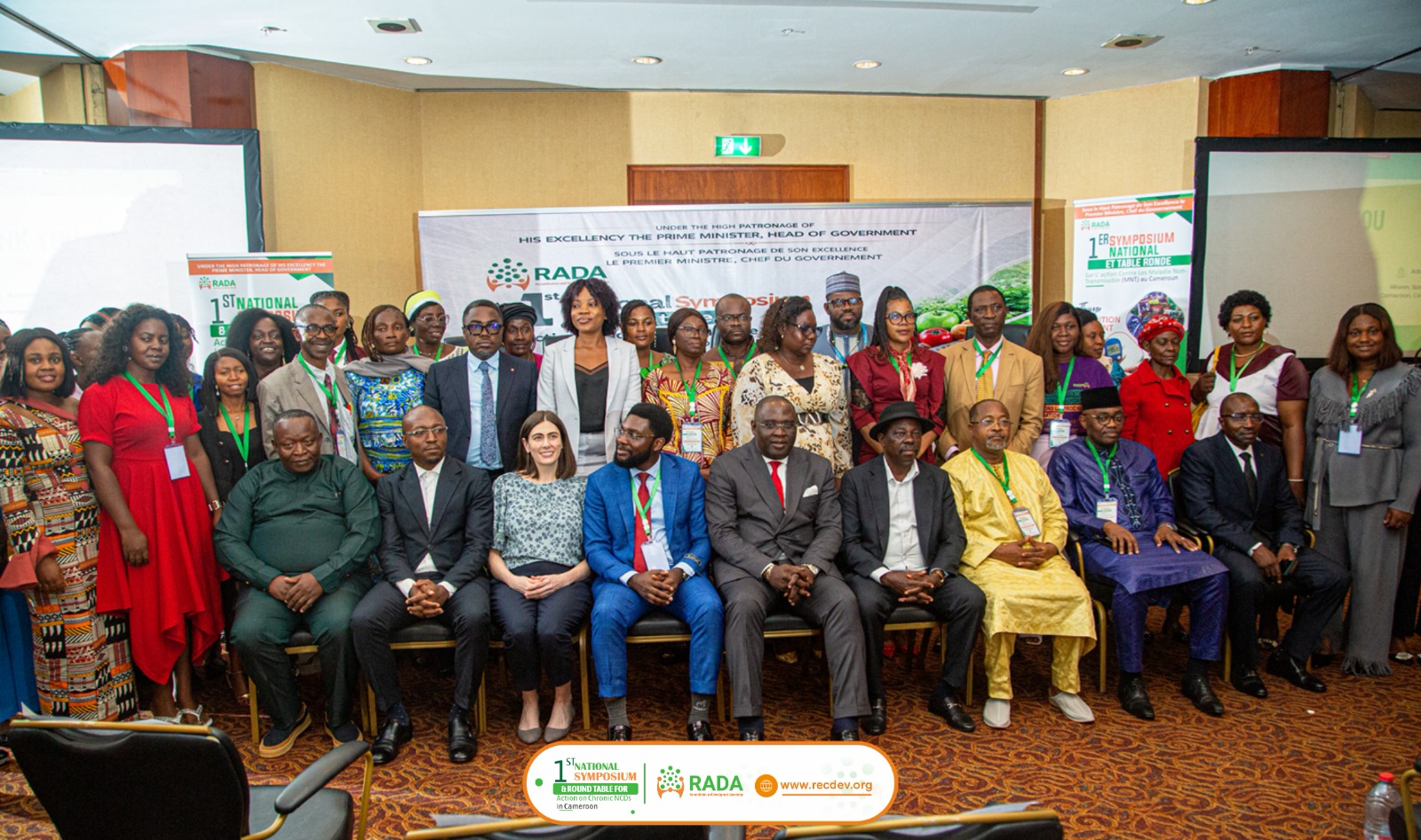
In a decisive step toward curbing Cameroon’s rising Non-Communicable Diseases (NCDs) burden, the Reconciliation and Development Association (RADA), under the patronage of His Excellency, the Prime Minister, Head of Government, organized the First National Symposium and Round Table for Action on Chronic NCDs in Cameroon on April 8–9, 2026, at the Hilton Hotel, Yaoundé. This two-day high-level forum brought together government institutions, civil society actors, academia, parliament, and international partners around two transformative policy mechanisms: Front-of-Pack Warning Labelling (FoPWL), Marketing Restriction Regulation, and Fiscal policy (Taxation of sweetened beverages and ultra-processed products).
With 43% of deaths in Cameroon now attributed to NCDs as of 2022, the symposium marked a transition from evidence generation to policy endorsement. Opening the symposium, RADA’s CEO Ferdinant M. Sonyuy set a clear tone: this was not another platform for discussion, but a moment for decisive policy action, and Dr. Acha Evaristus reinforced the message: “As medical personnel, we understand the power of policies to prevent NCDs. Clinical practice alone is not enough. All we need is the pen of the policymakers.” Prof. Jean-Claude Mbanya’s keynote presentation established the urgency, stating: “Diet is the major driver,” and warning policymakers that “Cameroon has policies that are never implemented. If no action is taken from today’s discussions, the cost of inaction will exceed the cost of action. Every delay increases the burden.”
Presentations and high-level roundtables confirmed institutional readiness and outlined implementation pathways, including advancing mandatory FoPWL, enforcing the 2018 Food Safety Law, enacting marketing restrictions to protect children, and redesigning fiscal policies to prioritize health outcomes. Evidence showed strong public support for health taxes, with 51.1% of Cameroonians in favor and 94.1% supporting the allocation of revenue to public health. Gaps in consumer awareness underscored the need to pair taxation with FoPWL and marketing restrictions. Key recommendations included transitioning to health-driven taxes, applying a 50% ad valorem tax to ultra-processed products exceeding nutrient thresholds, eliminating discount mechanisms, and earmarking revenue for NCD prevention and Universal Health Coverage.
In closing, Mr. Sonyuy reaffirmed RADA’s commitment to implementation, while the Prime Minister’s Representative stated: “The results of this symposium will be prepared and submitted to the Minister of Public Health, who will return it to the Head of State.” The symposium established that Cameroon’s evidence phase is a work in progress, and as Prof. Mbanya stated, “Every delay increases the burden.”
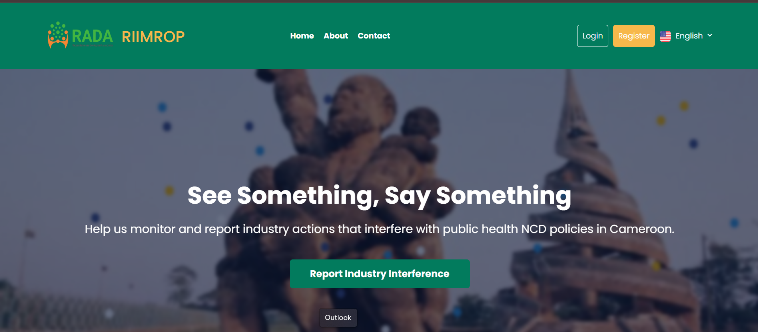
When “Goodwill” Comes with Strings Attached: What RIIMROP Uncovered About Big Food’s and Beverage Playbook in Cameroon, January- March, 2026
Picture this: a well-known food or beverage brand sponsors a community health walk, funds a school feeding program, or partners