Way-In Nkwen, Bamenda, Cameroon

TAXATION OF UNHEALTHY PRODUCTS IN CAMEROON: A STRATEGIC PATHWAY TO HEALTH AND SUSTAINABLE FINANCING

At the 1st National Symposium and Roundtable for Action on Chronic Non-Communicable Diseases (NCDs) in Cameroon, taxation emerged as a central pillar in advancing public health. Under the theme “Financing Health and Prevention through Fiscal Policies in Cameroon,” the discussions highlighted the urgent need to adopt effective fiscal measures to curb the rising burden of diet-related diseases.
The symposium brought together policymakers, researchers, civil society actors, and international partners to examine how a tax increase on sweetened beverages (SBs) and ultra-processed products (UPPs) can simultaneously improve population health and generate sustainable revenue.
Opening the session, Dr. Mapa Clarisse provided a comprehensive analysis of Cameroon’s health tax landscape. Her presentation underpinned the growing consumption of unhealthy products and the limited use of fiscal tools to address this trend. She emphasized that while Cameroon has made progress in health promotion, taxation remains underutilized as a preventive strategy.
A key highlight of the symposium was the presentation by Ferdinant Sonyuy on evidence-based advocacy for Health Taxes in Cameroon, its objective, and considerations for health, revenue, and effective Tax designs. This presentation emphasized that taxation is one of the most effective strategies in public health. Drawing from global evidence, including insights from the World Health Organization (WHO), he stressed that meaningful impact requires bold action: “If a product is causing health problems, it cannot be taxed lightly.”
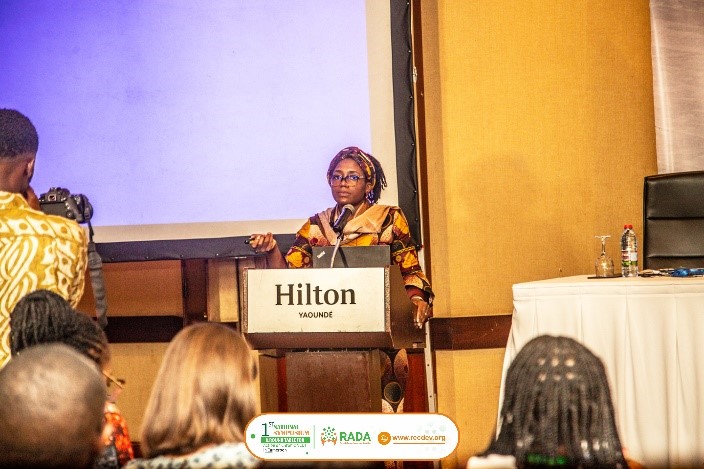
He emphasized that the primary objective of health taxation is to improve health outcomes not merely to generate revenue. However, when properly designed, such policies create a triple“win-win-win” scenario: reducing disease burden, lowering healthcare costs, and increasing government revenue to address broader development challenges.
Sonyuy outlined key factors for effective tax design, including using appropriate tax structures, significantly increasing tax rates, linking price increases to reduced consumption, and targeting harmful products specifically. He also stressed the need for complementary regulations, such as restricting access to unhealthy products in schools and public institutions to better protect vulnerable groups.

The next presentation was on the Economic Benefits and Fiscal Implications of Taxation of SB and UPPs in Cameroon. From an economic perspective, Professor Ndamsa Dickson demonstrated that taxing unhealthy products can yield significant fiscal and health gains. By increasing the prices of sweetened beverages and ultra-processed foods, consumption patterns can shift toward healthier alternatives. At the same time, the additional revenue generated can be reinvested into the health system, supporting prevention and treatment of NCDs.

Evidence from the Knowledge, Attitudes, and Behaviors (KAB) study presented by Chenwi Claris revealed encouraging levels of public awareness and support for health taxes across nine regions of Cameroon. The findings suggest that, with proper communication and transparency, taxation policies are likely to gain public acceptance.
A critical challenge discussed during the symposium was industry interference. Dr. Adeolu Adebiyi highlighted how vested commercial interests often resist regulatory measures through lobbying and misinformation. He called for strong political will, transparency, and safeguards to protect public health policies from undue influence.

The high-level roundtable that followed emphasized the relevance of taxation as a tool to reduce consumption of harmful products. Participants agreed that increasing prices through taxation is one of the most effective ways to influence consumer behavior and reduce NCD risk factors. The discussion also reinforced the need for intersectoral collaboration, particularly between health, finance, and trade sectors.

In conclusion, the second day of the symposium made it clear that the taxation of unhealthy products is not merely a fiscal measure but a public health necessity. Cameroon stands at a critical juncture where bold policy decisions can significantly reduce the burden of NCDs while strengthening domestic resource mobilization. Moving forward, success will depend on political commitment, sustained advocacy, and the ability to translate evidence into actionable policies. By leveraging taxation as a preventive tool, Cameroon can take a decisive step toward protecting its population while building a healthier future.

Prepared by: RADA’s Communication Team


Cameroon’s First National Symposium on NCDs Sets the Stage for Transformative Food Policy: A Strong Push for Front-of-Pack Labelling

Front-of-Pack Warning Labels (FoPWL) are rapidly emerging as a cornerstone policy in the fight against non-communicable diseases (NCDs), particularly in contexts where unhealthy diets are increasingly shaped by the widespread availability and aggressive marketing of ultra-processed foods. At the recent National Symposium and Round Discussion Table for Action on NCDs in Cameroon, the FoPWL took central stage as a high-impact, evidence-based intervention capable of transforming the country’s food environment. Stakeholders from government, academia, civil society, and international partners assembled on a shared understanding: empowering consumers with clear, visible, and scientifically grounded nutritional information is essential to enabling healthier choices and reducing the burden of diet-related diseases. As emphasized by Dr. Acha Evaristus in his opening session, “when evidence meets political will, policy action must follow,” underscoring the urgency of translating research into enforceable national policy.

Evidence presented during the symposium reinforced the effectiveness of Front of Package Warning labels in both influencing consumer behavior and driving industry reformulation. Global experience demonstrates that when designed using strong nutrient profiling models, made mandatory, and tailored to local contexts, these labels significantly reduce consumption of products high in salt, sugar, and unhealthy fats. In Cameroon, emerging evidence further underscores this urgency, with findings revealing that a significant proportion of food products exceed recommended thresholds without transparent disclosure. This reality reinforces a critical point raised during discussions: “healthy choices cannot be made in an unhealthy environment”, said Nicole Ide. Furthermore, warning labels are not merely informational; they actively shape market behavior, as highlighted by Nicole Ide, who noted that they serve as “catalysts for industry reformulation and public health protection.”

Despite the existence of regulatory frameworks such as the 2018 food safety law and earlier labelling guidelines, implementation remains a persistent challenge. Misalignment between policies, lack of clarity in operational guidelines, and limited enforcement mechanisms continue to constrain progress. Institutions responsible for standardization, public health, and market regulation each play vital roles, yet greater coordination and political commitment are required to translate policy intent into measurable outcomes. The symposium repeatedly echoed a defining message: “policies that are not implemented are policies that do not exist,” said Dr. Mba Camille, highlighting the gap between legislative development and real-world impact.
Crucially, FoP warning labels were positioned not as a standalone solution, but as part of a broader, integrated strategy to address unhealthy diets. Complementary measures, including restrictions on the marketing of unhealthy foods to children, strengthened consumer protection frameworks, and targeted fiscal policies, were identified as essential to maximizing impact. Participants emphasized that sustained public education and inclusive implementation strategies are equally critical, particularly for small and medium-sized enterprises. As reflected in the roundtable discussions, Ferdinant M. Sonyuy said, “front-of-pack warning labels are only effective when supported by strong policies, public awareness, and accountability mechanisms,” reinforcing the need for a holistic and coordinated approach.

The path forward is clear. Cameroon possesses the technical evidence, stakeholder alignment, and institutional structures necessary to implement an effective FoPWL system. What is now required is decisive, coordinated action to operationalize these frameworks, safeguard them against competing interests, and ensure their implementation at scale. As aptly concluded during the symposium, “the cost of inaction will always be greater than the cost of action,” said Prof Mbanya during his key note address a powerful reminder that the time to act is now. Advancing Front-of-Pack Warning Labelling represents a critical opportunity to reshape the national food environment, protect public health, and demonstrate leadership in NCD prevention across the region.

Cameroon’s First Symposium & Round Table for Action on Non-Communicable Diseases.

In a decisive step toward curbing Cameroon’s rising Non-Communicable Diseases (NCDs) burden, the Reconciliation and Development Association (RADA), under the patronage of His Excellency, the Prime Minister, Head of Government, organized the First National Symposium and Round Table for Action on Chronic NCDs in Cameroon on April 8–9, 2026, at the Hilton Hotel, Yaoundé. This two-day high-level forum brought together government institutions, civil society actors, academia, parliament, and international partners around two transformative policy mechanisms: Front-of-Pack Warning Labelling (FoPWL), Marketing Restriction Regulation, and Fiscal policy (Taxation of sweetened beverages and ultra-processed products).

With 43% of deaths in Cameroon now attributed to NCDs as of 2022, the symposium marked a transition from evidence generation to policy endorsement. Opening the symposium, RADA’s CEO Ferdinant M. Sonyuy set a clear tone: this was not another platform for discussion, but a moment for decisive policy action, and Dr. Acha Evaristus reinforced the message: “As medical personnel, we understand the power of policies to prevent NCDs. Clinical practice alone is not enough. All we need is the pen of the policymakers.” Prof. Jean-Claude Mbanya’s keynote presentation established the urgency, stating: “Diet is the major driver,” and warning policymakers that “Cameroon has policies that are never implemented. If no action is taken from today’s discussions, the cost of inaction will exceed the cost of action. Every delay increases the burden.”

Presentations and high-level roundtables confirmed institutional readiness and outlined implementation pathways, including advancing mandatory FoPWL, enforcing the 2018 Food Safety Law, enacting marketing restrictions to protect children, and redesigning fiscal policies to prioritize health outcomes. Evidence showed strong public support for health taxes, with 51.1% of Cameroonians in favor and 94.1% supporting the allocation of revenue to public health. Gaps in consumer awareness underscored the need to pair taxation with FoPWL and marketing restrictions. Key recommendations included transitioning to health-driven taxes, applying a 50% ad valorem tax to ultra-processed products exceeding nutrient thresholds, eliminating discount mechanisms, and earmarking revenue for NCD prevention and Universal Health Coverage.

In closing, Mr. Sonyuy reaffirmed RADA’s commitment to implementation, while the Prime Minister’s Representative stated: “The results of this symposium will be prepared and submitted to the Minister of Public Health, who will return it to the Head of State.” The symposium established that Cameroon’s evidence phase is a work in progress, and as Prof. Mbanya stated, “Every delay increases the burden.”

Click to Download Full Report