Way-In Nkwen, Bamenda, Cameroon

Training of Trainers on Type 1 Diabetes Awareness in the Northwest region of Cameroon

Day 1

As part of the key activities for RADA’s Type 1 Diabetes (T1D) Community Fund Project, a training of community sensitizers on T1D was earmarked for February 2026. The first day of the Training of Trainers (ToT) on Type 1 Diabetes Awareness was nothing short of impactful. This training was made possible thanks to the technical and financial support from Panorama Global and the Type 1 Diabetes Community Fund.

The training held on February 18 2026 at the Baptist Conference Hall Nkwen, Bamenda, and brought together over 28 passionate participants committed to becoming champions of change in their communities. The atmosphere was marked by enthusiasm, dedication, and a shared commitment to saving lives through awareness and early diagnosis.

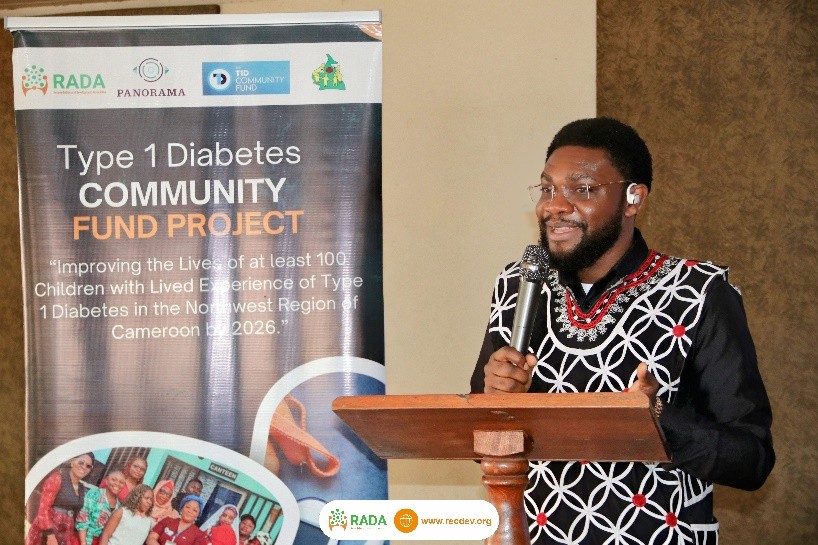
The training officially opened with inspiring remarks from the CEO and Project Director, Mr. Ferdinant Sonyuy, who called on participants to remain fully engaged in this life-saving mission. The Project Manager, Moffo Anaisse, followed by clearly outlining the goal of the training: to equip participants with the knowledge, skills, and practical tools needed to educate communities and support people living with Type 1 Diabetes.
  • Building Strong Foundations: Understanding Type 1 Diabetes

Module 1, facilitated by Mme Nfor Claudette, focused on the Basics of Type 1 Diabetes. Participants gained a clear understanding that Type 1 Diabetes is an autoimmune condition and not caused by lifestyle choices. While it cannot be prevented, early diagnosis and proper management are critical to saving lives.
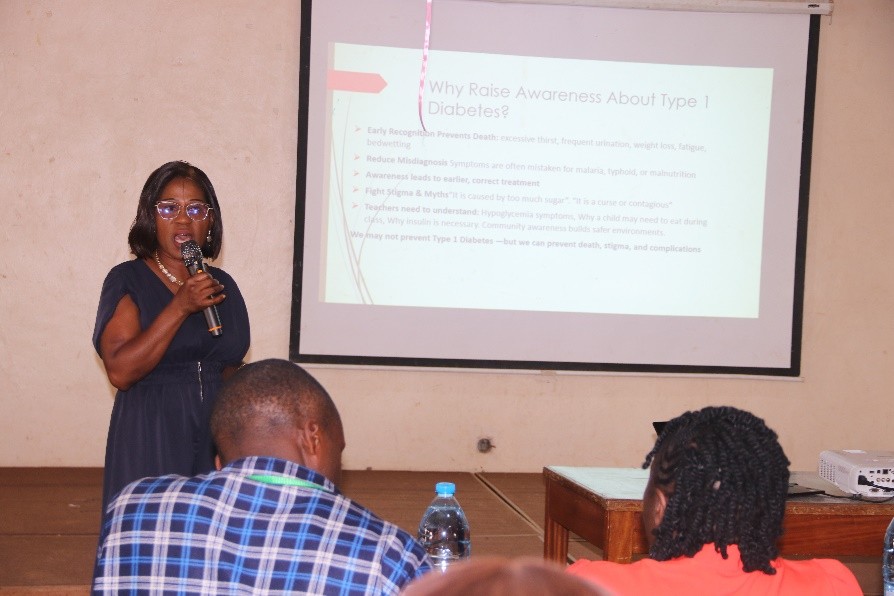
Special emphasis were placed on recognizing warning signs such as:

               •             Frequent urination

               •             Excessive thirst

               •             Unexplained weight loss

               •             Persistent fatigue

Participants were reminded that timely action can prevent severe complications and improve survival, particularly among children.

  • Addressing Myths and Reducing Stigma

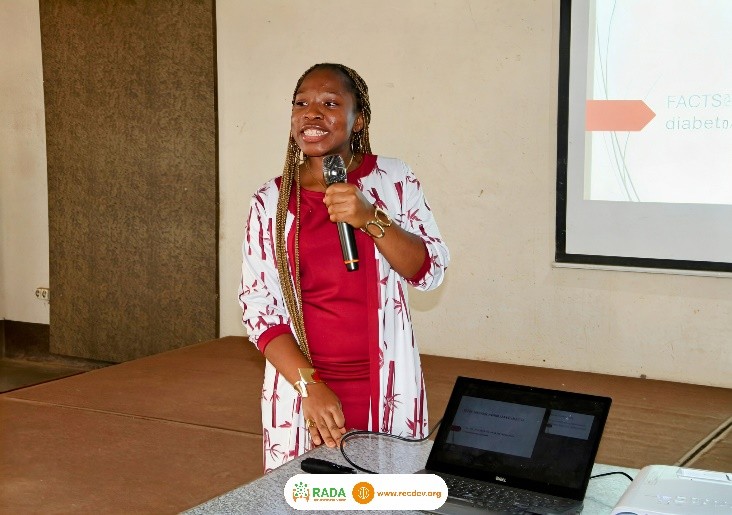
Module 2, led by Project Manager Moffo Anaisse, tackled common myths and misconceptions surrounding Type 1 Diabetes. Through interactive discussions, participants learned how to confidently debunk false information, reduce stigma, and promote accurate, life-saving messages within their communities.
Practical Strategies for Community Engagement

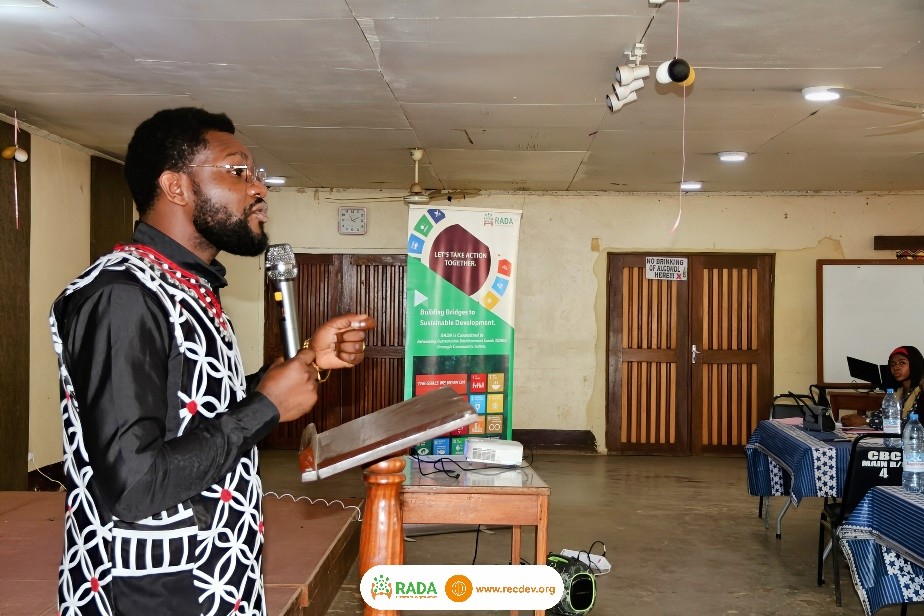
In another engaging session, Mr. Ferdinant Sonyuy guided participants through practical strategies for raising awareness on Type 1 Diabetes Mellitus. These included by;

•   Engaging schools and church

.• Collaborating with community leaders

  •  Working with policymakers

The message was clear: awareness leads to early diagnosis, prevents complications, and improves survival rates, especially among children.
Hands-On Demonstration for Effective Outreach

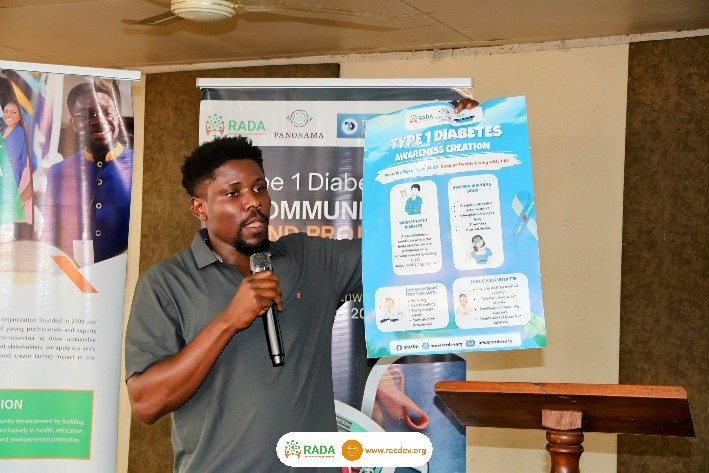
The day also featured a practical demonstration led by Project Officer Temboh Yannick on the effective use of RADA health promotion materials. Participants learned how to strategically use posters and stickers to strengthen community sensitization efforts and maximize outreach impact.

The session concluded with motivating closing remarks from the CEO, who thanked participants for their dedication, active participation, and commitment to transforming knowledge into community action
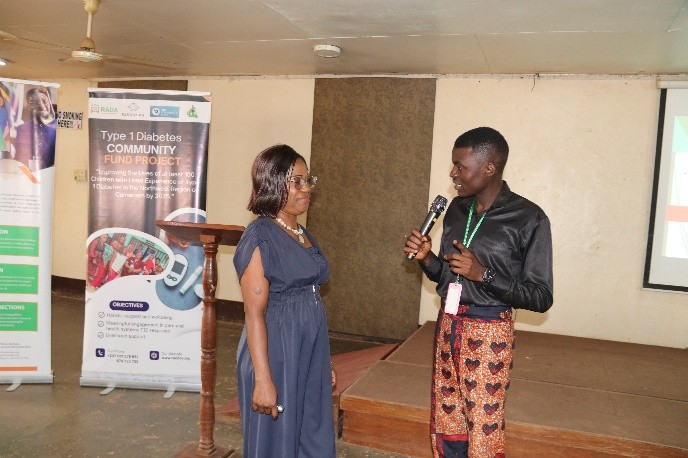
In Conclusion, Day 1 laid a strong foundation for building a network of informed advocates ready to advance Type 1 Diabetes awareness and key takeaways.

By: Bidmia Christabel and Merveille Njantio

World pulses day

Theme of World Pulses Day 2022:

“Nutritious Seeds for a Sustainable Future”

Pulses are annual crops that yield between one and twelve grains or seeds. The term “pulses” is limited to crops harvested solely as dry grains, which differentiates them from other vegetable crops that are harvested while still green. Pulses are known as grain legumes. They are sustainable foods that can be stored for long and can contribute to increasing food security. Pulses grow in pods and come in a variety of shapes, sizes and colors. The United Nations Food and Agriculture Organization (FAO) recognizes 11 types of pulses: dry beans, dry broad beans, dry peas, chickpeas, cow peas, pigeon peas, lentils, Bambara beans, vetches and lupins. Others that are common for us here in Cameroon are, guinea corn, soya beans, “Koki” beans and many more.

They are a cheap, low fat source of protein, fibre, vitamins and minerals which are very necessary for health. It is an edible seed that grows in a pod. In 2019, approximately 83.4million tons of pulses were produced worldwide. To that effect the world observes international pulses day on February 10th. Pulses are the most widely cultivated legume in Africa. Hence is exported in great quantities to different countries, meanwhile it is one of the world’s most stable foods. They help to improve food security because as dried seeds, they can be stored for a long period of time without a decrease in nutrition.

Despite the high demand of pulses worldwide, its productive potential still remains very low. It is sad to know that in recent years farmers are constantly faced with a lot of risk and challenges but despite all these challenges farmers still continue cultivating this crop because they are an important part of a sustainable cropping system. It is to this reason that FOA celebrates February 10th as World Pulses Day, which is an opportunity to raise awareness on the nutritional benefits of pulses and their contribution to sustainable food systems and a world without hunger.

Based on this RADA says # YES TO INCREASE PRODUCTION OF NUTRITIOUS SEEDS LIKE PULSES AMONGST OTHERS FOR A SUSTAINABLE FUTURE#

WORLD DOWN SYNDROME DAY 2021.

The United Nations General Assembly declared 21st March in
December 2011 as the World Down Syndrome Day and the first was commemorated in
March 21st, 2012.

This important day seeks to raise awareness, mobilize support and recognition of dignity, rights, and well-being of persons living with Down Syndrome across the world.

The theme of this year is; “CONNECT” focusing on improving
connections to ensure all people living with Down Syndrome can connect and
participate on an equal basis with others.

We connect to share ideas, experiences, establish, maintain
and improve quality of life. We need to connect to protect and promote the
civil rights of people living with Down Syndrome.  

This year RADA is raising the following points of awareness
to the public:

  1. Down Syndrome is a non-communicable disease.  It is not under the prism of several others
    not categorized in the WHO five by 5 matrix.
  2. It Is important to understand the risk factors
    and prevention of Down Syndrome
  3. How important it is that persons living with
    Down Syndrome are connected with persons living without it

    The following are the risk factors of Down Syndrome?

  1. Advancing maternal age; That is usually women of
    the age 35 and above
  2. Women who already have one child with Down
    Syndrome (increased risk for subsequent pregnancies).
  3. Parents who are carriers of the genetic
    translocation for Down syndrome.

Down Syndrome is not a disease or an illness that can be prevented but the following steps can be taken to help reduce the risk;

1. Mothers can take steps before and during pregnancy to have healthy pregnancy or visit a genetic counsellor before pregnancy to know your chances of having a child with Down Syndrome.

2.  Avoid late reproduction, anyone can under-take to complete their family at a relatively young age (below 35 of age) and the risk of an affected pregnancy will remain but could be substantially reduced.

3. Pregnant mothers should avoid smoking and drinking of alcohol during pregnancy.

4.  Parents at high risk of Down Syndrome should take daily multivitamin like folic acid.

Do you know of a person or persons living with Down Syndrome? Do you know how to connect with them? If No, the following tips should help you connect freely:

Down syndrome has a genetic origin and cannot therefore be transmissible from one person to another. Even though one might think that because it is genetic, this means that it is passed from one parent to the child. This is not what this means. One child in the same family can have and another won’t have. It is not transmissible, so you can relate without fear or stigma.

Family members play an important role in loving and encouraging persons living with Down Syndrome. We encourage family members to show that they love and care. They are the first to show that People Living with Down syndrome can add value to themselves and the society in which they live.

We need to treat people living with Down Syndrome as friends and see them first as persons with unique personalities, rather than persons in need. If not, we cannot properly meet their needs. We therefore need to recognize that they need access to education and leisure activities.


Article by: Kebuh Sandrine, Ntam Damaris, Ferdinant M. Sonyuy.

WORLD KIDNEY DAY – a look at your kidney.

Kidney disease is the inability of the kidneys to filter blood as they should.

2021 WKD Theme - World Kidney Day

A joint initiative conceived a World Kidney Day of the International Society of Nephrology and the International Federation of the Kidney Foundation. It started on the 2nd of March 2006 with 66 countries participating.

The purpose of this day is to raise awareness on the importance of the kidneys to our overall health and to reduce the frequency and impact of kidney disease and its associated health problems worldwide.

The theme for this year, 2021, is: “LIVING WELL WITH KIDNEY DISEASE,” to increase education and awareness about effective symptom management to improve the health of people living with Kidney Disease to improve the quality of life and empowering participation in their overall well being and citizenry.

I have come across so many people living with kidney disease like an Uncle of mine, who goes through a lot, week after week to survive, requiring Hemodialysis, a treatment whereby blood is removed from the body and filtered through an artificial membrane called a dialyzer, or artificial kidney. Then the filtered blood is returned to the body. In this process, wastes and water are filtered from your blood, as your kidneys did when they were healthy. Hemodialysis helps control blood pressure and balance important minerals, such as potassium, sodium, and calcium, in your blood.

He goes through this once or twice a week, depending on the condition to filter blood complemented with blood transfusion. He also lives on essential medication, which requires a lot of money. The majority of people living with Kidney Disease in Cameroon and other low- and middle-income countries end up dying for several reasons you can already perceive. Cost, access to quality care, etc. How many people can sustain this?

Now, what are the RISK FACTORS OF KIDNEY DISEASE? The following conditions or behaviors are the risk factors for developing kidney disease. They include Obesity, Hypertension, Smoking, and Diabetes. If you have been to the hospital or not, yet, you have any of these aspects in your life, you are at risk of kidney disease. Action needs to be taken to prevent Kidney disease and its complications. This includes practicing or ensuring the following:

  • Avoid smoking
  • Limiting excessive consumption or misuse of alcohol
  • Eating healthy fruits and vegetables as much as you can in your diets.
  • Drinking at least 2 to 3 liters of water per day
  • Limiting the consumption of salt (avoid adding salt to your diet)
  • Frequent emptying of the bladder (Don’t wait until you are too pressed to relieve yourself)
  • Regular exercise (15-30 minutes daily won’t kill you. It will save you and help you become smarter)
  • Frequent check on blood pressure and blood sugar. (This is now being done in many health facilities, some for free or at 500 FCFA such as in CBC Health Facilities)

    The tips above are handy if you don’t yet have kidney disease. But if you are already a person living with Kidney disease, or know one, feel free to do all the above in addition to the following:                                                                                                                                  Seek to belong to a patient support group for Kidney disease or other NCDs such as your hospital-based clinic groups for psychosocial and other peer or professional support.

World Kidney Day - Photos | Facebook

Take care of yourself if you are a person living with Kidney disease.

Join our advocacy group for People Living with Chronic NCD Conditions called Our Views Out Voices. We work together to advocate the government and other communities for better care to PLWNCDs (Contact us on WhatsApp at +237674733730 for modalities to join).

Seek as much help as you can to cover the cost of care.

Pray.

Lastly and also, most importantly, avoid all the risk factors so that you can be safe from the extreme severities of complications that come with continuous exposure to salt, alcohol, smoking, stress, and others mentioned. 

Declaration: This article was co-authored by Mabel T. And Ferdinant M. S.

The Cameroon Civil Society NCD Alliance Launches Report on COVID-19 and NCDs Response in Cameroon

Jean Claude Mbanya, MD, PhD, MRCP (UK), FRCP (London), FTWAS
Chair, CACSNA

Another Service Call at the Africa NCDs Network

RADA was elated that the CEO, was recently elected as Chair of the African NCDs Network. “This means that together with the 5 member team, from West, Central, Southern, East and francophone Africa, the ANN has a timeline to be established by December 2020” said Ferdinant.

The Africa NCDs Network (ANN)

He added that “It is team work. We have these regional representatives and an Interim Advisory Board all working together to establish the Network”. The Africa NCDs Network is an advancement in the effort to make NCDs are priority everywhere. The Vision of the ANN to “Make NCDs a priority in the African Continent” by advocating for NCD prevention and control in the African towards universal health access, affordability and risk factor mitigation.

Ferdinant also indicated that the African Union, African sub regional economic blocks as well as regional partners and stakeholders are the key partners to make policies that will support Africa to hold up to the global NCD burden come to realization.

It is worth noting that Ferdinant was already serving as the Central African sub regional representative to the Interim Secretariat and is currently the Secretary General of the Cameroon Civil Society NCD Alliance (CACSNA) and the President of the Reconciliation and Development Association, RADA.

NCDs currently are responsible for 41 million deaths each year; representing about 70% of annual global deaths. 85% of the premature deaths occurring in Low and middle income countries partly because of limited access to care, and increasing prevalence of the risk factors of tobacco use, unhealthy diets, physical inactivity, alcohol misuse and pollution. The Major categories of NCDs responsible for this catastrophe include Cardiovascular Conditions, Cancers, Diabetes, Chronic Respiratory Disease and Mental Disorders. The key risk factor driving these are largely due to increasing urbanization, globalization and demographic aging.

More about NCDs on: https://www.who.int/news-room/fact-sheets/detail/noncommunicable-diseases

Follow the ANN at: https://twitter.com/AfricanNCDsNet

RADA in Collaboration with the Cameroon CS NCD Alliance organizes Panel Discussion and Press Briefing

SUMMARY OF MESSAGES:

  • We all are accountable for our actions and responsible for our environment through good policies.
  • Preventing NCDs makes perfect economic sense.
  • NCDs are slow in progression, a silent pandemic. NCDs kill and everyone is at risk.
  • It’s our duty to sensitize the public on the existence and dangers of NCDs and their risk factors
  • NCDs are a leading cause of poverty in many countries and should be prioritized in ours too.
Nessa Mbatu, Ferdinant M. and Claudette N.

The global week for Action on NCDs is aimed at reawakening people on the presence of NCDs. The action week is in its third year and the theme for this year was ACCOUNTABILITY. RADA Cameroon in collaboration with the Cameroon NCD Alliance, organized a panel discussion\media briefing amidst several other activities under the umbrella national theme “Raising Attention, Promoting Accountability on NCDs at local and national levels in Cameroon”.

This panel discussion was to inform and educate the public on NCDs through the media.  This event was attended by a total number of 35 persons, with 13 media houses represented to cover the event. The panel discussion started at 10:30am. This was a late start due to the power failure which hindered the early start of the discussion. The panelist on board for the discussion where, Mr.Ferdinant Mbiydzenyuy the CEO of RADA/SG of the Alliance, Madam Claudette the North West Delegation of Health, Focal Person for NCDs , Madame Relindis, the Chief of Bureau Health for the Health District and  Madame Mbatu Nessah a youth advocate and representative from Value Health Africa. The Panel was moderated by Irene Mofor, a young Advocate for NCDs.  The panelist present for the discussion were of diverse backgrounds so as to be able to answer the certain question form their various field of understanding. Due to the crisis that was prevailing in the region, the person living with NCDs who was invited to the panel was unable to get a taxi to arrive on time. Also, the Person living with Kidney Disease who is a Journalist and was invited to moderate, was unable to come as she was unwell.  

Recommendations by/To RADA and the CACSNA after the session:

  • Youths should take up the responsibility to go out in to the public and sensitize the people on the risks associated with NCDs, the various risk factors and how to manage and control them.
  • Government should implement a policy ban on the sales of tobacco, sweet drinks and alcohol especially in student environments.
  • There should be an improvement in specialty care given to persons living with cancer, stroke, diabetes and NCDs in general.
  • RADA should come up with programs that will help facilitate the fight against NCDs in the country.
  • As individuals, it is our duty to be aware of the existence of NCDs and work to prevent and control it.
Cross Section of Staff of RADA

To conclude, we all know that NCDs are not Human friendly and they are not biased they do not look at how rich you are or how poor you are nor do they look at how tall and short you are. They affect each and every one of us. Statistics shows that we are truly living in a generation that is more likely to die before their parents due to the risk of NCDs.  So, we have to take action right now to fight against the spread of NCDs. Let stand together and fight this common cause in other to save our future generations to come. Health is wealth.

A detailed report with speakers specific comments to Media is here:

Global Week of Action on NCDs- 2020: Raising Attention, Promoting Accountability on NCDs at Local and National levels in Cameroon

Theme-2020: Accountability

What is the Global Week of Action for NCDs?

NCDs are currently the #1 cause of death and disability in the world, and the burden is disproportionately severe in low- and middle-income countries, where four out of five people with an NCD live. The Global Week for Action on NCDs is organized by the NCD Alliance global and aims to unite the NCD movement each year under a specific theme, concentrating our combined efforts with the aim of reducing the NCD burden globally and increasing health and equality. Join the movement!

Under the banner of “Raising Attention, Promoting Accountability on NCDs at Local and National levels in Cameroon” The Cameroon CS NCD Alliance will be mounting the national stage with activities to raise awareness on NCDs and the need for accountability regarding desired prevention and control SDG targets. The theme for this year’s Week of Action on NCDs is “Accountability”. Activities will put persons living with NCDs at the center of essence for the Week’s action.  

  1. Social Media Activities by all members
  2. Inclusive games at the Baptist Center by CBCHS
  3. Advocacy visits to Mayor, and MoH by CBCHS
  4. Radio Talk shows by CBCHS, RADA, and C3T
  5. Panel Discussion by RADA
  6. Tweet Chats  by RADA
  7. Interactive online Q&A on NCDs by RADA
  8. Zoom Conference – in Collaboration with CORE Group by RADA
  9. Patient meeting – by CBCHS
  10. Press briefing /Conference  by RADA and C3t
  11. Health Talks in Churches  by CBCHS
  12. Publication of statements by all members
  13. NCD Tracts sharing at a Major market by C3t
  14. Zoom Webinar by Rural Doctors

                          See the full time table of Activities below and dates to participate.

SN Activity Dates Organization(s) i/c
1 Disseminate messages on social media
(Contribute to ‘Voices of Change’; Share ‘Voices of Change’ quotes,
champion quote cards, info graphics, video messages or key messages through
social media using the harsh tag, #ActOnNCDs.)
September 7-13). All Member
organizations
2 Organise inclusive fun games at the Baptist Centre in Bamenda Saturday, September 12  CBCHS
3 Local Council Advocacy visit September
9
CBCHS
4 Visit to the radio for a Radio program (Radio Talk with Young NCD Advocates) September 8/September CBCHS/RADA
5 Organise
a meeting with Cancer Survivors in view of charting a path for the creation
of Patient Advocacy Group for Persons living with cancer and Survivors of
cancer
 
  CBCHS
6 Publish campaign activities on member
newsletters including the “NCD Voice Newsletter” and “Radates” are in view. 
September 13- 14th CBCHS/RADA
7 Health Talks in
Churches 
September 13 CBCHS
8 Statements from member organizations
will be issued on media  (All
Associations) 
Full Week All Members
9 The
Alliance will also issue a Statement on media  on the global Campaign
September
9th – 13th
CACSNA
Secretariat
10 Sensitization
campaign through traditional media including Magic FM, Radio Tiemeni
Siantou(RTS), The Post and Le Messager 
September 7-13th C3T,
11 Field visit with
Media, CACSNA Team members in Yde, PLWNCD to sensitize population on the
various NCDs followed by the distribution of hydro-alcoholic gels and Flyers
on NCDs at Mvan neighbourhood at the level of travel agencies.
 September 8th 2020 at 14 Pm C3t
12

Two 2- Advocacy visit
to the authorities:
Le Sous
Directeur de la lutte contre les MNTsLe
Directeur de la Promotion de la Santé ou Sous Directeur de la Santé MentaleDélégué
régional de la Santé Publique pour le Centre

(We encourage members in Yde to partake
N.B use your masks along).

September 10-11, 2020 C3t
13 Panel
discussion/ Press Conference, to discuss the problem of NCDs, the Alliance’s
work on NCDs in collaboration with other partners that will be present in Bamenda
and possibly, Yaoundé. (RADA,).
Topic:
“Accountability on NCDs”
Friday 11th RADA
14 Zoom
Webinar with CORE Group partners: “Youth Leaders Taking Action:
Developing an NCDs-Focused Accountability Framework.”
Sept. 9,
2020
RADA
15 Tweet
Chart with Nigerian Partners
September
7, 2020
RADA
16 Online
Interactive Session on “Accountability on NCDs” with RADA CEO.
Sept. 13,
2020
RADA
17 Zoom conference for health care
providers in rural areas to discuss their experiences and current actions
taken by stakeholders in supporting persons living with NCDs in the context
of COVID-19
TBD Rural
Doctors

About the Theme of 2020

Governments have committed to many NCD targets through the United Nations (UN), such as World Health Organization (WHO) NCD targets and the Sustainable Development Goals (SDGs). Accountability mechanisms for NCDs that are currenetly in place can be strengthened by independent civil society-led action, especially at the local and national level. We can all help ensure that commitments made translate into targets met, to turn back the tide on the current NCD epidemic. We’ve seen through COVID-19 the devastating effects of neglect – it’s time to stop making the same mistake with NCDs!- from trade to livelihoods and ultimately, development.
(Adapted from NCDA website).

CEO of RADA Gets Elected as SG of CACSNA!

We are delighted to announce that The CEO of RADA, Ferdinant M. Sonyuy was elected and officially assumed the role of Secretary General of the Cameroon Civil Society NCD Alliance (CACSNA), on July 31, 2020 after an Elective General Assembly.

Ferdinant has served as the Interim Secretary General since the creation of the alliance, and was appreciated by the Caretaker Chair, Prof. J.C Mbanya for his leadership. CACSNA is the Cameroon Civil Society NCD Alliance, whose mission is to ensure a collective voice for NCD prevention and Control in Cameroon. It was started in 2018 after several efforts since 2013.

Eleven (11) organizations came together to initiate this move following a Diabetes and Non Communicable Disease Conference which took place at the Yaounde Hilton Hotel, Cameroon, organized by the World Diabetes Foundation (WDF) in partnership with the Health of Populations in Transition (HoPiT) Research Group, and in collaboration with the Ministry of Public Health.

The Alliance has since received technical support from the Global NCD Alliance which has spearheaded NCD advocacy globally for over 10 years.

The Interim role was lifted by a unanimous 100% vote as the Care Taker Executive mandate ended and the new executive mandated by over 14 delegates from 9 organizations working on chronic NCDs in Cameroon.

Prof. Jean Claude Mbanya, who was the Care Taker Chair, was re-elected as Chair, Dr. Flore Ndembiyembe of the Cameroon Coalition to Counter Tobacco was elected as Chair Elect, and other Board members were also elected.

This mandate will require the leadership team to forge an advocacy agenda to ensure a collective voice for NCD prevention and control in Cameroon for civil society. This comes at a time when persons living with chronic NCDs have greatest risk of dying from COVID-19. This is their first challenge.

We say Congratulations! 🎊🎊🎆

#ActonNCDs

/About RADA/
RADA is a civil society organization with mission to promote community development by building bridges to sustainable solutions in the domains of peace, health, education, agriculture and technology”.

Each of these domains are equally important towards reaching our vision and mission to see sustainable development in our communities. You can know more about our work on NCDs by visiting our website HERE

Self Care: The Six Dimensions of Resiliency

Times like these are those in which even leaders who are looked upon to care for others and give direction tend to need care. It was in this spirit that I manned up to benefit from the Self Care Workshop organized by RADA which focused on the 6 dimensions of resilience. I am glad to share these touching points I received:

The Body
Take time and appreciate your body because there is a spirit that lives in it. Take care of your body. One explanation for death is that we die when the body cannot sustain the spirit inside because it is too ‘butchered’ so to say. We can cause our body to be resilient by eating healthy diets, involving in physical exercises, and sleeping/resting for 6-8 hours a day to function properly. “If you don’t eat food as your drugs, you will eat drugs as your food”.

The Emotions
Emotions are the feelings we feel. If you don’t feel, then probably you are not human. But through circumstances, feelings without control can wreak havoc into our bodies and minds. Asking yourself how you fee is helpful, accepting our emotion especially negative ones and then managing them through self-talk or self-control. A little smile and humor sparks the right mindset toward great comedy of crisis around us.

The Mind:
It is the engine. An even better description is that it is the steering of all directions we drive to. Our minds harbor our thinking. Which is informed by our beliefs. Our beliefs inform us and motivate our actions. That is why as a man thinks, so he is. The key to a resilient Mind is to Re-set your mind. For instance, to depart from negative to positive thoughts.

Security:
We all do need security no matter where we find ourselves but it is highly needed by those in high crime wave areas and conflict embedded environments. When you are faced with fears, you can research about the issues and make an informed decisions such as changing your environment, fortifying your compound with a fence etc.  When you are secure, you feel calm, jubilant, hopeful, happy energetic etc but when insecurity comes in, you feel lonely, sad, fearful, frighten, etc. These are emotions provoked by how secured you feel during a time of crisis and you can managed by your action.

Relationships:
Life is all about networks. Relations are really important for self care resilience. Family, friends, loved ones, mentors colleagues, etc. are gold!  Having them bring more light to your life and the fear of losing them can demoralize you. So enjoy them now because you know they are vital part of your life. Relationships can meet your needs and give you hope to continue moving on like you never imagined. It might even happen in ways you have no idea about. No man can survive as an island. Use whatever unhealthy relationship comes to you as one more stone to build a house that stands firmer. When you feel lonely, you can contact someone in the community of your relationships and receive the support that only fellow loving human can provide. This includes communication, video talks, games, and fellowship with husband/wife, father or mother, brother or sister, friend, colleague, church members, etc. this is the beauty of relationships. Fellowship in online groups that work for you. Enjoy the goodness of friendship.

Purpose and meaning:

You cannot strive to be resilient when you have no purpose for which you want to win.  Your purpose is what drives you and gives you direction for ways out when obstacles mount on you. Be ready and not be found without a life of meaning or purpose each morning you wake up.

The session ended with general summarized and itemized tips on how to take care of oneself. These included Physical Exercise, Socialization (get in contact with friends, families, CEOs, mentors, counselors etc), and Relaxation (meditate, entertain yourself and don’t be a workaholic, take break from COVID-19 news etc).

The Following resources were provided for those who could check them out: