AN ARTICLE FOR THE COMMEMORATION OF WORLD DIABETES DAY 2025
Diabetes mellitus (DM) is one of the leading causes of global morbidity and mortality. It is manifested when the body cannot manufacture or utilise insulin. Millions of people with diabetes face daily challenges managing their condition in the workplace, including stigma, discrimination, and exclusion. This World Diabetes Day 2025, with the theme being Diabetes and Wellbeing, focused on the campaign slogan ‘Know more and do more for diabetes at work’
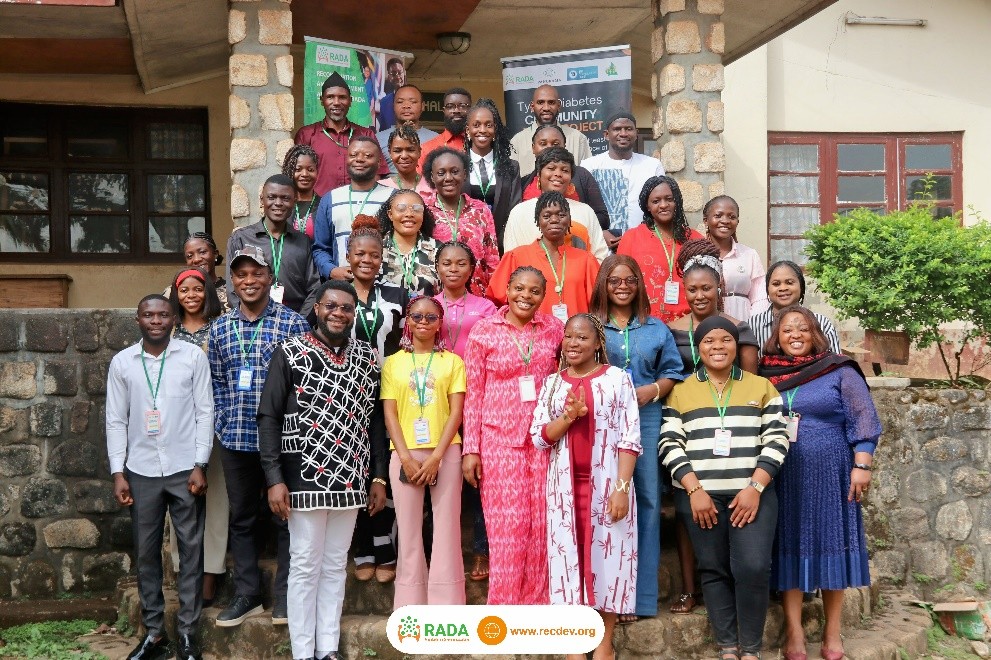
At RADA, we did a 05 days countdown from Monday, the 10th, till Friday, the 14th of November, on raising awareness on diabetes as a whole, the types, risks, and management techniques. On our last day, we conducted a video with the organisation's staff, focusing on Diabetes and the Workplace, and educating them on their role as staff employers or resource managers. The Regional Hospital Bamenda organized a program in commemoration of World Diabetes Day, and Moffo N. Anaisse, the program Manager for the Type 1 Diabetes Support Advocacy program, took part in it, where she prepared a speech and delivered it as follows;


“I would like to start by asking a question for us all, and it goes thus: Did we ever stop to think at some point about a scenario where physicians and medical scientists never found out what diabetes was, not to even talk of its management? That would have been a tragedy, creating a tale of endless grief for humanity
On behalf of the President/CEO of the Reconciliation and Development Association, Mr. Mbiydzenuy Ferdinant, I am honoured to be here today, November 14, 2025, a day recognized globally as World Diabetes Day. This year’s theme, Diabetes and Wellbeing, aligns with the overall SDG 3 target 4 on health and well-being. Non-communicable diseases (NCDs), such as diabetes, certainly pose a significant challenge to maintaining the state of well-being. Organizing a two-day picnic of champions in Baffoussam for children with lived experience of TID was one of the events that this year's RADA, in collaboration with the Regional Hospital and the Banso Baptist Hospital, organized to boost the well-being of these children and their caregivers. Indeed, the effect was profound, and the atmosphere was filled with widespread smiles and joyful expressions of the children and their parents, 26 in number.
Collaboration remains critical in the region to support the livelihood and psychological well-being of people living with diabetes. We want to appreciate the Regional Delegate of Public Health, Dr Ambe Lionel, and the Director of the Regional Hospital, Dr. Denis Nsame, for their strong and positive collaboration with RADA. Also, Mme. Aliah Deslyn, the Site Coordinator for the CDiC, together with Mme. Nfor Claudette, the Focal Person for Diabetes and Hypertension, and Mme. Mah Anyangwe, the Clinical Psychologist, proved to be a great force of true collaboration. Thank you for your exceptional work and dedication to service, as it is indeed rare to find such. I promise you the world is a better place because of you, our employees, parents, brothers, sisters, and children now have better diabetes management thanks to your strong commitment. Health is wealth, and we must preserve it at all costs.”
The day of the program started with a diabetes walk to the hospital round about and back and continued with a warm welcome speech from the Director of the Hospital, Dr. Denis Nsame followed by a series of learning sessions that included: an explanation of the theme of the year; Diabetes and Wellbeing, a talk on Diabetes in children and education on psychosocial support and nutrition for diabetic patients.
Indeed, it was a day well spent celebrating World Diabetes Day.
In conclusion, there is an urgent need for collective action to combat the global diabetes epidemic through awareness, prevention, accessible care, and management. This fight against diabetes is a shared responsibility requiring the collaboration of individuals, families, healthcare professionals, governments, and communities as a whole to implement effective prevention and control strategies.
Prepared by: Moffo Annaise