Webinar on Government’s Role in Restricting Unhealthy Diets and Promoting Healthy Options

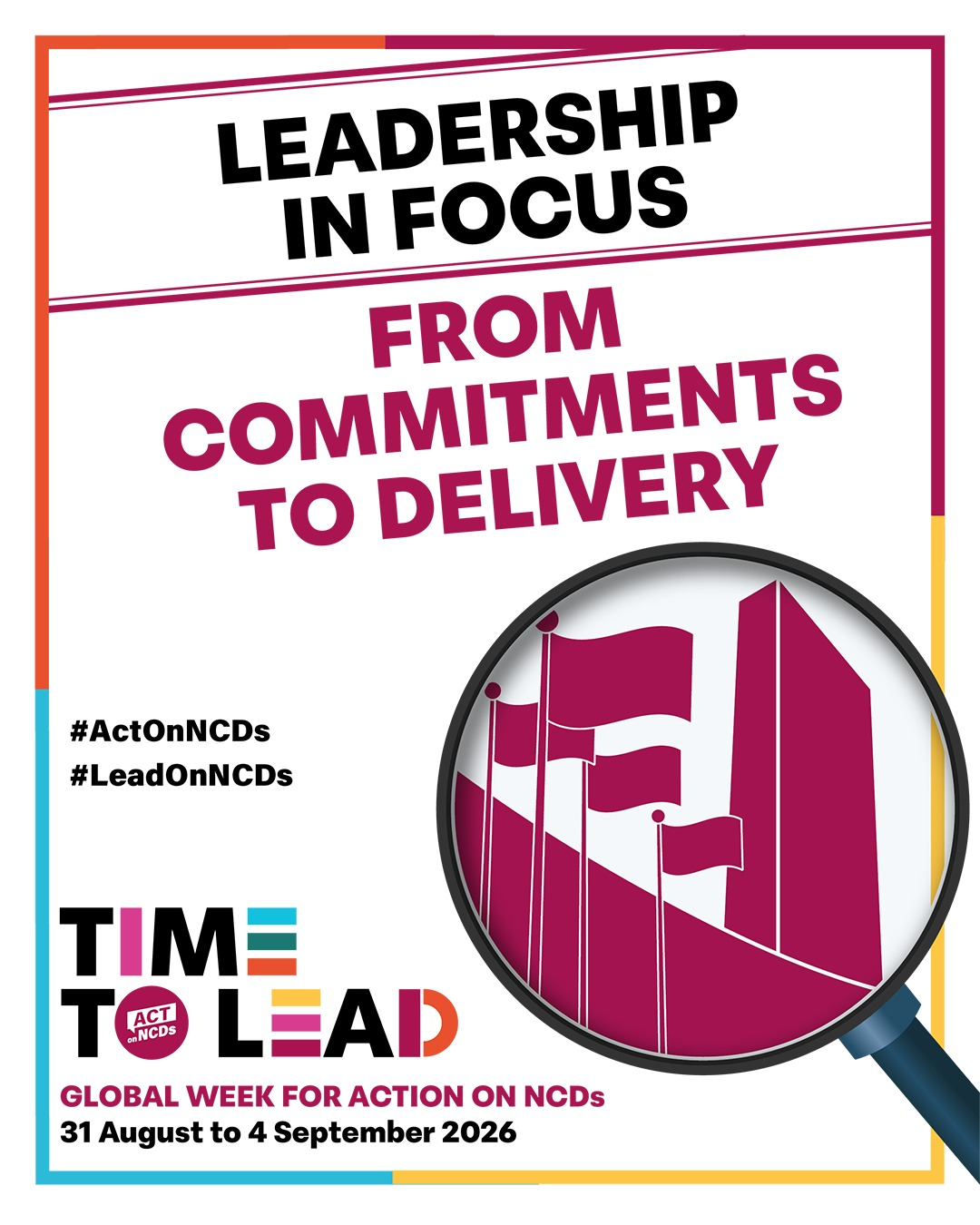
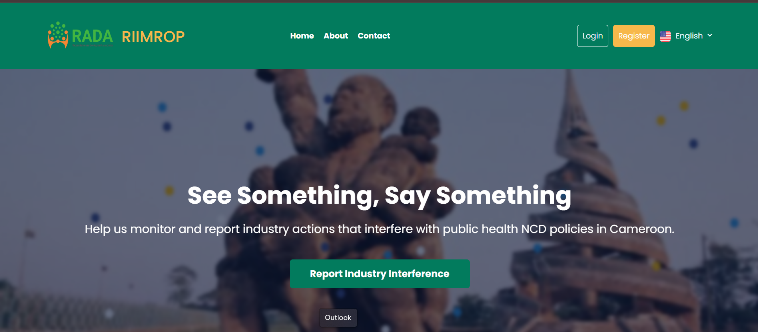
On September 23rd, 2025, the Reconciliation and Development Association (RADA) in collaboration with the Coalition for the Promotion of Healthy Diets in Cameroon, hosted a high-level webinar on Government’s Role in Restricting Unhealthy Diets and Promoting Healthy Options. This event, gathered about 50 persons in attendance including policymakers, civil society actors, media representatives, and public health professionals, focused on Cameroon’s response to the growing challenge of Non-Communicable Diseases (NCDs). The webinar was held within the framework of RADA’s Healthy Eating Program that closely followed the launch of the RADA Industry Interference Monitoring and Response Orientation Platform (RIIMROP), a tool designed to safeguard policy processes from undue industry influence.

The session began with opening remarks by Ms. Claris Chenwi, Project Coordinator at RADA, who welcomed participants and stressed the urgency of tackling unhealthy http://localhost/radabackupwp-content/uploads/2025/10/Image-2.jpg diets through collaborative action. She noted that the government has a unique responsibility in creating an enabling environment for healthy living. “Civil society can advocate and raise awareness, but without government leadership and high-level political will, our efforts will not be enough to reverse the NCD crisis,” she remarked.
First Presentation: Policy Interventions for Healthy Eating in Cameroon
The first presentation was delivered by Mr. Ferdinant M. Sonyuy, President/CEO of RADA, Secretary General of the Cameroon NCD Alliance (CNCDA), and Executive Director of ANN. His presentation focused on, Policy Interventions for Healthy Eating in Cameroon: Implications to Cameroon’s Post-UNHLM Leadership on NCDs, highlighted the global and national burden of NCDs and underscored the role of government in championing food policies that protect citizens.

Drawing on the outcomes of the United Nations High-Level Meeting (UNHLM) on NCDs, Mr. Sonyuy explained that every country is expected to be represented at the meeting by high-level officials such as the Minister of Health or Foreign Affairs, or ideally, the Head of State. “When our leaders from the Senate to the Presidency give serious consideration to the NCD crisis, it signals strong national commitment and ensures accountability in the fight,” he stated.

He further called for Cameroon to pass what he described as ‘low-hanging fruit’ policies, including taxation on sweetened beverages (SBs) and the implementation of Front of Package Warning Labels (FoPWLs). “Charity must begin at home. We cannot claim leadership at the regional and global level if we are not implementing evidence-based food policies here in Cameroon,” he said.
Highlighting RADA’s contributions, Mr. Sonyuy spoke about the Healthy Eating Cameroon Program which advocates for UPPs and SBs taxation, healthy food procurement policies, reformulation of unhealthy products, and implementation of FoPWLs. He also stressed the importance of the RIIMROP platform, which was recently developed to monitor and counter industry interference. “Industry interference is a reality. We must be able to identify it, monitor it, and act collectively to safeguard the health of our population,” he added.
Second Presentation: Leadership in Promoting Healthy Eating in Cameroon
The second presentation was delivered by Ms. Marlen Wango, Health Promotion Lead at RADA. Her talk on: Leadership in Promoting Healthy Eating in Cameroon: Challenges and Opportunities, focused on the negative impacts of unhealthy diets and the strides made under RADA’s Healthy Eating Campaign.

“Unhealthy diets have overtaken tobacco as the leading risk factor for NCDs globally. In Cameroon, the story is no different,” she explained. Ms. Wango noted that diets high in sugar, salt, fat, and calories have contributed to rising cases of obesity, hypertension, diabetes, and cancers. She further emphasized that these diseases are not only destroying lives but also placing immense pressure on the country’s healthcare system.
Ms. Wango highlighted the achievements of the Healthy Eating Campaign, which has built a coalition of 22 civil society organizations, trained 35 health educators, and partnered with 38 media houses. “So far, our campaign has reached communities through churches, schools, mosques, markets, hospitals, and social media platforms, with an impressive outreach of more than 10,000 people,” she shared. She also underscored the role of the Social Cognitive Theory in driving behavioral change and the importance of community-based educators in building trust and credibility.
Despite successes, she noted several challenges including misinformation, limited resources, and resistance from some segments of the public. “The industry has been pushing narratives that unhealthy products fight hunger and malnutrition. We must counter these with evidence and community education. Nobody wants to be sick, not even our leaders,” she stressed.
The next key activity was a thorough question and answer session that was moderated by the host, Magdalene Nghanwi. The participants were encouraged to make use of the RIIMROP platform and also join the on going policy advocacy.
CEO’s Last Words
In his final words, Mr. Ferdinant M. Sonyuy emphasized unity and accountability: “It is important we all gather and work with the government so that our health is secured. Things that affect our health need to be responded to without any conflict of interest.”
Closing Remarks
In his closing remarks, Mr. Ferdinant M. Sonyuy delivered a powerful message, calling for urgent political action: “Our leaders, from the Senate to the Presidency, must give high-level consideration to the NCD crisis. Policies should be passed without delay to protect the health of our people. This is not only a public health issue but a development imperative.”
He reaffirmed RADA’s commitment to work with the government, civil society, and international partners to build a healthier future for Cameroon. The webinar ended with a collective call to action for stronger government leadership, sustained advocacy, and community engagement to ensure that healthier food environments become a reality in Cameroon.