WEBSITE DEVELOPMENT CONSULTANT – Africa NCDs Network (ANN)
Background The African NCDs Network – ANN urgently requests the services of a website development consultant to develop a modern website to advance her communication and advocacy activities. Interested consultancy firms must come from reputable and qualified companies with a track record of success in designing and producing digital solutions.
The consultant is to note the following terms of reference: The website should be able to:
Ensure accessibility to all materials related to the work of the ANN
Provide key information on all NCDs and related matters in frameworks that allow for access
Communicate information on NCDs coherently
Ensure the best experience for users
Provide the opportunity to further interaction and collaboration among key users of the site.
The website must provide a look-and-feel that will unlock the potential of NCD Advocacy in Africa through functionalities that will be secured while displaying the content in an organized, attractive and user-friendly manner.
Deliverables
A website that presents an excellent visual look in line with ANN Colors and expected functionalities
A user manual
Delivery of a webinar for the support staff and system administrators to perform the content upload, system maintenance and administration.
Associated communications addons or tools
Language options – English and French
Donate functionality
Mail and Newsletter management and other tools integrated
Support and maintenance: Administrative and technical support, quality control for a period of 6 months.
Duration of the Task The duration planned for the website development is two (2) months from 1st July 2021 – 30th August 2021, including time required to present the work and training of staff to administer the page.
Qualifications for the Consultancy
A minimum of 5 years’ experience and skills in website development and management
Demonstrate experience of having undertaken similar tasks
Ability to facilitate train and transfer knowledge to communications Officers
Sample work: The aspiring consultant must Present/show links of at least 3 recent works (not more than 5 years old).
Application Process Proposals including a resume should be submitted by email to: ncdsafrica@gmail.com
Application Deadline: June 30, 2021.
CONSULTANT FOR THE DEVELOPMENT OF A STRATEGIC PLAN FOR THE AFRICA NCDs NETWORK – ANN
Background The Africa NCDs Network (ANN) wishes to develop a Five (5) years Strategic Plan (SP) (2022-2027). The purpose of which is to assist in the continent’s aspiration of reducing the prevalence of NCDs and the global target of reducing by one-third premature deaths from NCDs as stipulated in Goal 3 of the Sustainable Development Goals (SDG).
The idea of the strategic plan is to determine and assess the strengths and weaknesses, as well as opportunities the ANN can take advantage of in its internal and external working environment.
The exercise will identify the ANN’s key advocacy priorities around prevention, treatment, care and support of meaningful involvement of people living with NCDs and on primary healthcare and the attainment of universal health coverage noting the enormous challenges faced on the continent. The plan should help to monitor, measure, evaluate and review progress future work and progress.
To accomplish this objective, a consultant will be contracted for 3 months to develop, analyse and produce the ANN Strategic Plan in collaboration with the Secretariat of the ANN.
Scope of Work. The consultant will lead and guide the process of developing the full five-year strategic plan and work with the ANN secretariat to ensure the process and product.
The consultant will conduct the following activities:
Present an inception report including a comprehensive desk review of documents relevant to an understanding and execution of the assignment;
Elaborate a methodology/action plan, work plan, list and contacts of key stakeholders to be engaged.
Undertake a review of relevant background documents that underpin work done on NCDs on the continent and elsewhere to form the context for the development of the Strategic Plan.
Specific activities could include but not limited to:
A one-on-one interview with key members of the ANN via virtual means/telephone
An online survey/consultation for ANN members to complete
Facilitation of a Sub-Regional Focus Group Discussion (FGD)l with support of the ANN secretariat for each of the four sub-regions; East, West, Central and Southern Africa.
The FGD will adopt a participatory method, including brainstorming sessions
The discussion will centre on key advocacy and political moments, national/global priorities the ANN will take advantage of
Mapping of potential national and global sponsors
Mapping of NCD champions and ambassadors
Validation meeting to finalize the document
Presenting of the final report to the ANN
Commitment to Quality Work The consultant shall use an evidence-based approach and ensure the highest standards of work and timely delivery at every stage of the work. In particular, the consultant shall ensure clarity of objectives and processes during the stakeholder consultations; countercheck all facts and figures cited; ensure that the content and format of the draft strategy meets the highest standards for such documents, and ensure proper editing and clarity.
Expected Deliverables
An inception report
An outcome draft document from the FGDs
A report on recommendations for the development of the strategic plan based on the desk review, online consultation/survey and interviews conducted.
A draft 5-year strategic plan for discussion and consultation
A document on the outcome of the strategic plan validation meeting
A final strategic plan document electronic copy.
Duration of the task The duration planned for the development of the strategic plan is 3 months from 1st July 2021 – 30th September 2021 including time required for the desk reviews, online consultation, interviews, facilitation of the process, drafting and validation of the plan.
Qualifications for the Consultancy:
A minimum of 3 years experience and skills in strategic planning
Experience in programming, online surveys (With Consultant’s own system(s), leading strategic planning processes and good group facilitation skills
Qualification and experience in social science and /or public health
Extensive work experience and proven record in advocacy, policy, campaign, strategic management
Demonstrated experience of having undertaken similar assignments
Good analytical and documentation/report writing skills
Good communication and facilitation skills
Excellent command of oral and written English
Cultural awareness and sensitivity to gender and disability issues
Sample wok
Present/show in soft copies at least 3 recent works (5 years’ time space) on strategic plan or something similar you have led.
Application Process
Proposals should be submitted by email to: ncdsafrica@gmail.com The deadline for submission is the close of business on 30th June 2021. Up-to-date curriculum vitae (CV)
Cover letter detailing how the applicant fits the profile and describing the consultant’s understanding of the task, responsibilities and detailed work plan that breaks down activities and outputs.
Note: Only short listed applications will be contacted.
Since its establishment in 2018, the Alliance has progressed from being led by interim leadership with the charge of establishing it, to its first Board and leadership.
In 2020, the Cameroon NCD Alliance, amidst the COVID-19 pandemic, carried out activities that introduce its presence in-country. This includes notably the study on how the Cameroon COVID-19 response considered NCDs and the ACTonNCDs Campaign in September 2020 organized by the global NCD Alliance.
The Alliance was awarded the Fuel Award by the Global NCD Alliance on their activities in the ACTonNCDs Campaign. This award will assist the Alliance to strengthen her activities in 2021, including putting up a permanent website and enhancing its functionality structure.
“The Alliance is poised to map out civil society working on NCDs in 2021 to expand its membership base and prepare for progress monitoring, in 2021” – Secretary Genera, CACSNA
More information about the Alliance’s activities in 2020 can be found on the Annual Report.
World Autism Awareness Day
The United Nations General Assembly unanimously declared 2 April as World Autism Awareness Day (A/RES/62/139) and was adopted on December 18 of 2007 that every 2 April is World Autism Awareness Day, to highlight the need to help improve the quality of life of those with autism so they can lead full and meaningful lives as an integral part of society. The notion of autism as a spectrum was developed in 2013 by the American Psychiatric Association.
Autism or Autism Spectrum Disorder,
refers to a range of conditions
characterized by challenges with social skills, Repetitive behaviours, Speech
and nonverbal communication, as well as by unique strengths and differences
example include Repetitive behaviours like hand-flapping, rocking, jumping or
twirling, constant moving and “hyper” behaviour.
The theme for this year is not yet known!
The term “spectrum” reflects the wide variation in challenges and strengths possessed by each person with autism.
This year in RADA, we shall be raising awareness, increase knowledge and understanding of autism
1 Autism is a non-communicable disease.
2 It is important to understand the risk factors and prevention of Autism.
There are 4 main sub-types of autism
recognized within the Diagnostic and Statistical Manual of Mental Disorders.
1 Autistic Disorder or Autism or Childhood autism: People living with this condition always have language delay, intellectual disability, communication challenges and unusual behaviour.
2 Asperger Syndrome: people with this condition usually have milder symptoms of autistic disorder and might have social challenges and unusual behaviour. They typically do not have problems with language or intellectual disability.
3 Childhood Disintegrative Disorder (CDD): these children develop normally for at least two years and then lose some or most of their communication skills.
4 Pervasive Developmental Disorder (PDD): is atypical autism.
People with autism may have problems with social, emotional, and communication skills. They might repeat certain behaviour and might not want change in their daily activities. They have different ways of learning, paying attention, or reacting to things. It begins at early childhood and lasts throughout a person’s life. They repeat actions over and over again and have unusual reactions that is they don’t pay attention to the way things smell, taste, look, feel or sound.
There’s no cause of autism. Research suggests that autism develops from a combination of genetic and
non-genetic, or environmental, influences and these influences appear to
increase the risk that a child will develop autism.
1 Genetic risk factor: changes in the
genes increase the risk that a child will develop autism even if a parent is
carrying one or more of these gene changes, they may get passed to the child
(even if the parent doesn’t have autism).
2 Environmental risk factorfactors:
certain environmental influences may further increase or reduce autism in
people who are genetically predisposed to the disorder. Importantly, the
increase or decrease in risk appears to be small for anyone with these risk
factors;
Advanced parent age
Pregnancy and birth complications such as multiple pregnancies (twin, triplet), low birth weight.
Use of anti-seizure drugs during pregnancy.
Maternal metabolic conditions such as diabetes, obesity and use of alcohol.
Diagnosis of Autism:Autism cannot be diagnosed since there is no medical test to diagnose the disorders. Doctors look at the child behavior and develop a diagnosis. Sometimes it can be detected at 18 months or younger. By age 2, a diagnosis by an experienced professional can be considered very reliable and it takes two steps;
Developmental
Screening.
Comprehensive
Diagnostic Evaluation.
The treatments of autism are ;
1 Applied Behavioral Analysis
(ABA): is by breaking down skills like communication and cognitive skills
into smaller and simpler tasks. The tasks are then taught in a highly
structured way.
2 Discrete Trial Training
(DTT): is a teaching style that uses a series of trials and efforts to
teach each step of a desire behavior or response.
3 Speech and Language Therapy
(SLT): it aims at improving communication and language skills and it will
help improve their ability to interact with others socially.
Prevention: We need to do the following to prevent autism
1 Avoid taking any drugs during
pregnancy unless the doctor specifically prescribes them.
2 Avoid drinking alcoholic
beverages of any kind during pregnancy.
3 Following delivery, there are certain measures that may be helpful in preventing autism. One is early diagnosis and treatment of Phenylketonuria (PKU), which is a hereditary disease that is cause by liver enzyme required to digest the enzyme Phenylalanine. Similarly, early diagnosis and treatment of celiac disease may reduce the risk of a child having autism.
Article by ATUNEK JULIUS ESENEK
THE RIGHT TO THE TRUTH CONCERNING GROSS HUMAN RIGHTS VIOLATIONS AND DIGNITY OF VICTIMS
Gross
Human Rights violations are still recurrent despite the various Human Rights
instruments to regulate and protect Human Rights. Gross Human Rights violations
refer to the acts or violations that threaten a human being’s very existence.
Some examples of such breaches include genocide, murder, torture, unfair
trials, extrajudicial killings, to name a few.
I
was pleased to see an International Day to the Truth Concerning Gross Human
Rights violations and victims’ dignity. There is no better day and no better
way to talk about the truth concerning gross human rights violations and
victims’ dignity than today. It is commemorated annually in Archbishop Oscar
Arbulfo Romero’s memory, who was assassinated on March 24th, 1980, after
denouncing human rights violations. This date honors the victims of Human
Rights violations, pays tribute to those who have devoted their lives to and
lost their lives in the struggle to promote and protect human rights for all.
It
is also important to honor the memory of victims of such violations by giving
the truth concerning their death. The parties who grossly violate such
fundamental rights should be held accountable for the offenses and brought
before the justice system, and prosecuted accordingly. The right to the truth
concerning such violations implies knowing the whole and complete truth about
the events that transpired, their specific circumstances, and who participated
in them.
It
is enough pain that a family or community loses a relative or citizen due to
torture, extrajudicial killing, or genocide. Lies concerning their death or
circumstances leading to their death only add salt to the wound. Therefore, it
is crucial to speak the truth concerning these violations, provide victims with
effective remedies, and restore their dignity. Many individuals residing in a
conflict zone, such as in Cameroon’s Anglophone region, experience these
violations, and the truth is most often than not concealed.
“Having experienced such a scenario with the abduction and murder of a younger brother termed “a terrorist” without prior inquiry or fair trial, my family remains in pain when the truth keeps being concealed”- “The report of him being in the “ADF,” whereas he was an apprentice carpenter and was not given a chance to express himself and yet, tortured before being shot, remains a painful pill to swallow to date.” Says the sister of a victim. In this case, we see, therefore, that the ridicule has not brought dignity to his memory, and justice is yet to be served. It is vital to give accurate reports and justice to the victims, even if it’s just for the sake of their memory.
As we commemorate this day, let us protect human rights defenders in Cameroon, and the world, protect those who seek the truth and pay homage to all those who lost their lives to these violations or as a result of defending such rights. This way, we can grow our countries.
Let us give dignity even to the lost souls’ memories by speaking the truth concerning their death and bringing perpetrators to justice.
*This
article was written by Nange Hezelle and Edited by Ntam Damaris and Ferdinant
M. Sonyuy. * Subscribe to our newsletter here to receive like articles;
WORLD DOWN SYNDROME DAY 2021.
The United Nations General Assembly declared 21st March in
December 2011 as the World Down Syndrome Day and the first was commemorated in
March 21st, 2012.
This important day seeks to raise awareness, mobilize support and recognition of dignity, rights, and well-being of persons living with Down Syndrome across the world.
The theme of this year is; “CONNECT” focusing on improving
connections to ensure all people living with Down Syndrome can connect and
participate on an equal basis with others.
We connect to share ideas, experiences, establish, maintain
and improve quality of life. We need to connect to protect and promote the
civil rights of people living with Down Syndrome.
This year RADA is raising the following points of awareness
to the public:
Down Syndrome is a non-communicable disease. It is not under the prism of several others
not categorized in the WHO five by 5 matrix.
It Is important to understand the risk factors
and prevention of Down Syndrome
How important it is that persons living with
Down Syndrome are connected with persons living without it
The following are the risk factors of Down Syndrome?
Advancing maternal age; That is usually women of
the age 35 and above
Women who already have one child with Down
Syndrome (increased risk for subsequent pregnancies).
Parents who are carriers of the genetic
translocation for Down syndrome.
Down Syndrome is not a disease or an illness that can be prevented but the following steps can be taken to help reduce the risk;
1. Mothers can take steps before and during pregnancy to have healthy pregnancy or visit a genetic counsellor before pregnancy to know your chances of having a child with Down Syndrome.
2. Avoid late reproduction, anyone can under-take to complete their family at a relatively young age (below 35 of age) and the risk of an affected pregnancy will remain but could be substantially reduced.
3. Pregnant mothers should avoid smoking and drinking of alcohol during pregnancy.
4. Parents at high risk of Down Syndrome should take daily multivitamin like folic acid.
Do you know of a person or persons living with Down Syndrome? Do you know how to connect with them? If No, the following tips should help you connect freely:
Down syndrome has a genetic origin and cannot therefore be transmissible from one person to another. Even though one might think that because it is genetic, this means that it is passed from one parent to the child. This is not what this means. One child in the same family can have and another won’t have. It is not transmissible, so you can relate without fear or stigma.
Family members play an important role in loving and encouraging persons living with Down Syndrome. We encourage family members to show that they love and care. They are the first to show that People Living with Down syndrome can add value to themselves and the society in which they live.
We need to treat people living with Down Syndrome as friends and see them first as persons with unique personalities, rather than persons in need. If not, we cannot properly meet their needs. We therefore need to recognize that they need access to education and leisure activities.
Article by: Kebuh Sandrine, Ntam Damaris, Ferdinant M. Sonyuy.
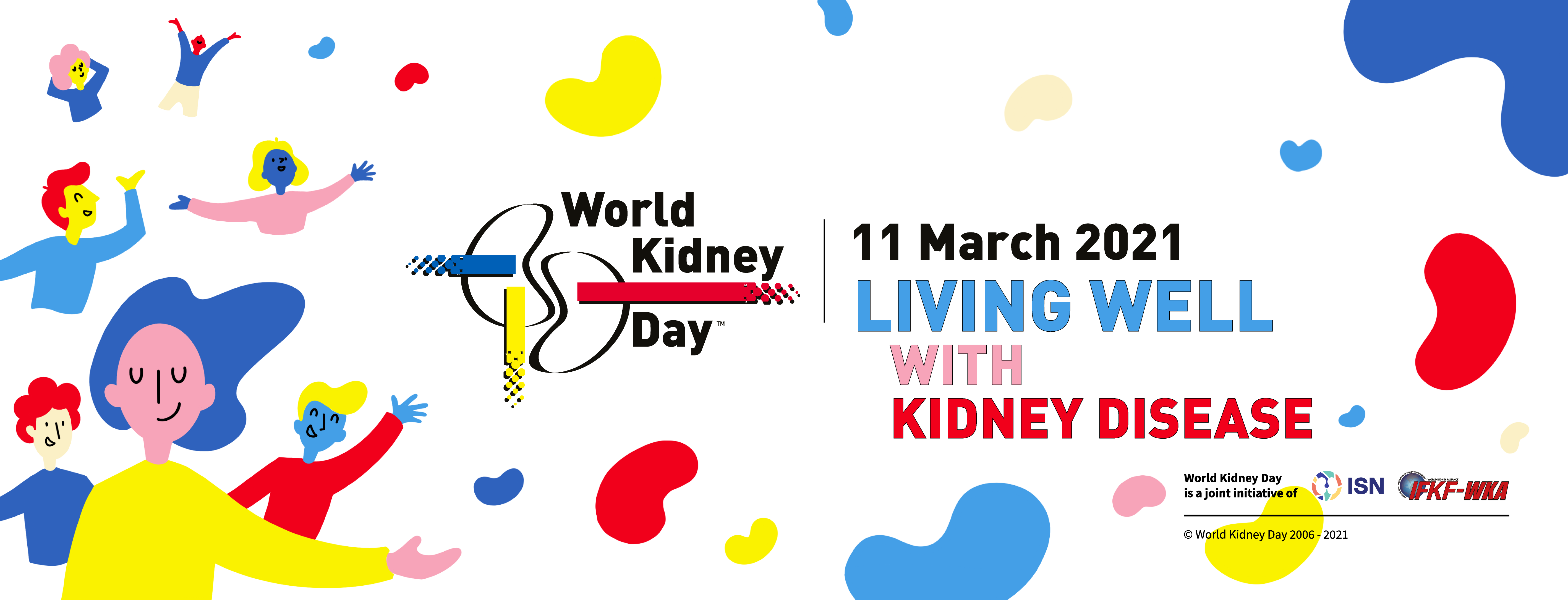
WORLD KIDNEY DAY – a look at your kidney.
Kidney disease is the inability of the kidneys to filter blood as they should.
A joint initiative conceived a World Kidney Day of the International Society of Nephrology and the International Federation of the Kidney Foundation. It started on the 2nd of March 2006 with 66 countries participating.
The purpose of this day is to raise awareness on the importance of the kidneys to our overall health and to reduce the frequency and impact of kidney disease and its associated health problems worldwide.
The theme for this year, 2021, is: “LIVING WELL WITH KIDNEY DISEASE,” to increase education and awareness about effective symptom management to improve the health of people living with Kidney Disease to improve the quality of life and empowering participation in their overall well being and citizenry.
I have come across so many people living with kidney disease like an Uncle of mine, who goes through a lot, week after week to survive, requiring Hemodialysis, a treatment whereby blood is removed from the body and filtered through an artificial membrane called a dialyzer, or artificial kidney. Then the filtered blood is returned to the body. In this process, wastes and water are filtered from your blood, as your kidneys did when they were healthy. Hemodialysis helps control blood pressure and balance important minerals, such as potassium, sodium, and calcium, in your blood.
He goes through this once or twice a week, depending on the condition to filter blood complemented with blood transfusion. He also lives on essential medication, which requires a lot of money. The majority of people living with Kidney Disease in Cameroon and other low- and middle-income countries end up dying for several reasons you can already perceive. Cost, access to quality care, etc. How many people can sustain this?
Now, what are the RISK FACTORS OF KIDNEY DISEASE? The following conditions or behaviors are the risk factors for developing kidney disease. They include Obesity, Hypertension, Smoking, and Diabetes. If you have been to the hospital or not, yet, you have any of these aspects in your life, you are at risk of kidney disease. Action needs to be taken to prevent Kidney disease and its complications. This includes practicing or ensuring the following:
Avoid smoking
Limiting excessive consumption or misuse of alcohol
Eating healthy fruits and vegetables as much as you can in your diets.
Drinking at least 2 to 3 liters of water per day
Limiting the consumption of salt (avoid adding salt to your diet)
Frequent emptying of the bladder (Don’t wait until you are too pressed to relieve yourself)
Regular exercise (15-30 minutes daily won’t kill you. It will save you and help you become smarter)
Frequent check on blood pressure and blood sugar. (This is now being done in many health facilities, some for free or at 500 FCFA such as in CBC Health Facilities)
The tips above are handy if you don’t yet have kidney disease. But if you are already a person living with Kidney disease, or know one, feel free to do all the above in addition to the following: Seek to belong to a patient support group for Kidney disease or other NCDs such as your hospital-based clinic groups for psychosocial and other peer or professional support.
Take care of yourself if you are a person living with Kidney disease.
Join our advocacy group for People Living with Chronic NCD Conditions called Our Views Out Voices. We work together to advocate the government and other communities for better care to PLWNCDs (Contact us on WhatsApp at +237674733730 for modalities to join).
Seek as much help as you can to cover the cost of care.
Pray.
Lastly and also, most importantly, avoid all the risk factors so that you can be safe from the extreme severities of complications that come with continuous exposure to salt, alcohol, smoking, stress, and others mentioned.
Declaration: This article was co-authored by Mabel T. And Ferdinant M. S.
Women’s Day 2021: Zooming on Gender Stereotype
Doh-Nyagang Miriam Gohyit is a holder of a Masters Degree in English private law and currently a Volunteer at the Reconciliation and Development Association, RADA
Gender
stereotype remain a significant factor affecting the status of men and women in
society. Despite some progress, thanks to the measures that have been
introduced in recent years. There is still need for information. The notion of
gender is related to the sex of the individual. There are pervasive and
remarkably uniform differences in the personality traits ascribed to men and
women. There is considerable agreement across
a large psychological study that a typical woman is seen as warm, gentle, kind
and passive, whereas a typical man is viewed as tough, aggressive and
ambitious.
Stereotype is a generalized view or preconception about attributes or characteristics that are or ought to be possessed by members of a particular social group or the roles that are or should be performed by members of a particular social group. Gender stereotype on the other hand, is the practice of ascribing to an individual, woman or man, specific attributes, characteristics or roles by reason of her or his membership in the social group of women or men. (Gender Stereotypes and Stereotyping and Women’s Rights (2014))
Creator:/Credit: Getty Images
Gender
stereotypes are complex and originate from local culture, traditions and other
characteristics that seem to differentiate the two sexes. Children learn what
constitutes female and male behavior from their family and friends, the media
and institutions including schools and religious bodies. Gender stereotypes can
have an adverse effect on all genders. It limits women’s or men’s capacity to
develop their personal abilities pursue their professional careers and make
choices about their lives and life plans.
The
increasing number of gender studies in the recent decades reflects the growing
public interest to exploration of gender identity and norms that reinforce
social roles of men and women while linking particular attributes and
characteristics with a particular gender.
Gender stereotypes shape self-perception,
attitudes to relationships and influence participation in the world of work. In
a social environment, they can affect a young person’s classroom experience,
academic performance, subject choice and well-being. The assumptions we make
about women and men maybe conscious or unconscious and can result in people
being treated differently or offered different opportunities based on their
gender.
In
our society today many believe that women are the only ones who suffer from
gender stereotype. This is a wrong assumption as bias and Stereotypes affect
both men and women. Men, just like women, are constricted by stereotypes and
penalized if they act outside their traditional gender roles. For example, they
are not expected to cry, to be weak or express their emotions.
Gender
stereotype and roles are learned. Men and women are expected to display
different behaviors, especially in four major behavioral areas: personality
development and temperament, communication patterns, prosocial behavior (those
that facilitate interpersonal relationships) and power-related behaviors.
There
are many differences between men and women. To some extent, these are captured
in the Stereotypical images of these groups. Stereotypes about the way men and
women think and behave are widely shared. However, Stereotypical expectations
not only reflect existing differences, but also impact the way men and women
define themselves and are treated by others.
The
idea that women are weaker and must be protected creates a world where women
are discouraged from taking on exciting challenges. The belief that “true men
do not show emotion” creates a world where men are not able to form deep
personal relationships. This can be extremely damaging to their mental health
in the long-term. Thus, gender stereotypes can hold people back from their true
potential. The more people learn about these stereotypes and how it is
dangerous, the more likely equal treatment between the genders will develop.
The
international Human Rights Law Framework prohibits gender stereotypes and
Stereotyping which undermine the employment of human rights and fundamental
freedoms. States have obligations to eliminate discrimination against women and
men in all areas of their lives. This obligation requires states to make
measures to address gender stereotypes both in public and private life as well
as to refrain from stereotyping.
There
should be an improvement in the social and cultural patterns of conduct and
also the elimination of practices that are based on stereotyped ideas of
inferiority or superiority of other genders. Men and women are both affected
and can live their roles in life, without having to feel hurt by any forms of stereotypes
if we understand and apply our knowledge on the existence of negative actions
on stereotypes.
The Africa NCDs Network (ANN) report on the needs, challenges and priorities of African people living with NCDs.