Way-In Nkwen, Bamenda, Cameroon

Training of Trainers on Type 1 Diabetes Awareness in the Northwest region of Cameroon

Day 1

As part of the key activities for RADA’s Type 1 Diabetes (T1D) Community Fund Project, a training of community sensitizers on T1D was earmarked for February 2026. The first day of the Training of Trainers (ToT) on Type 1 Diabetes Awareness was nothing short of impactful. This training was made possible thanks to the technical and financial support from Panorama Global and the Type 1 Diabetes Community Fund.

The training held on February 18 2026 at the Baptist Conference Hall Nkwen, Bamenda, and brought together over 28 passionate participants committed to becoming champions of change in their communities. The atmosphere was marked by enthusiasm, dedication, and a shared commitment to saving lives through awareness and early diagnosis.

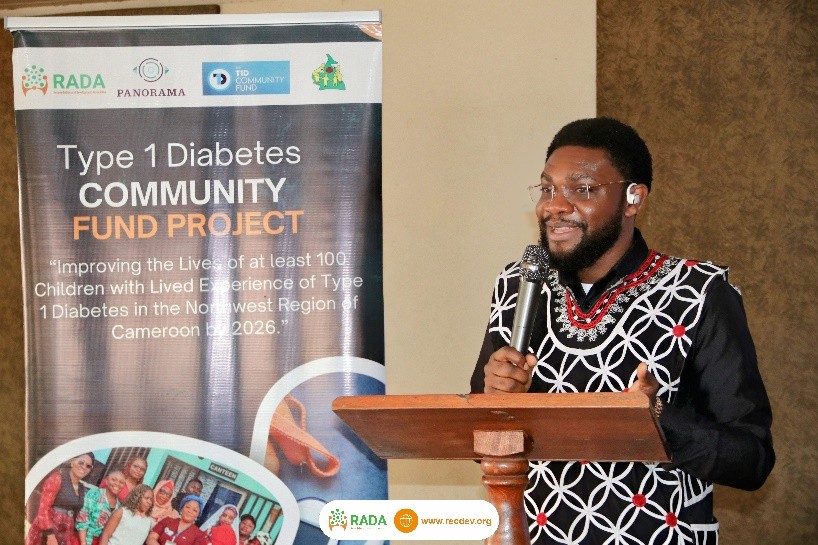
The training officially opened with inspiring remarks from the CEO and Project Director, Mr. Ferdinant Sonyuy, who called on participants to remain fully engaged in this life-saving mission. The Project Manager, Moffo Anaisse, followed by clearly outlining the goal of the training: to equip participants with the knowledge, skills, and practical tools needed to educate communities and support people living with Type 1 Diabetes.
  • Building Strong Foundations: Understanding Type 1 Diabetes

Module 1, facilitated by Mme Nfor Claudette, focused on the Basics of Type 1 Diabetes. Participants gained a clear understanding that Type 1 Diabetes is an autoimmune condition and not caused by lifestyle choices. While it cannot be prevented, early diagnosis and proper management are critical to saving lives.
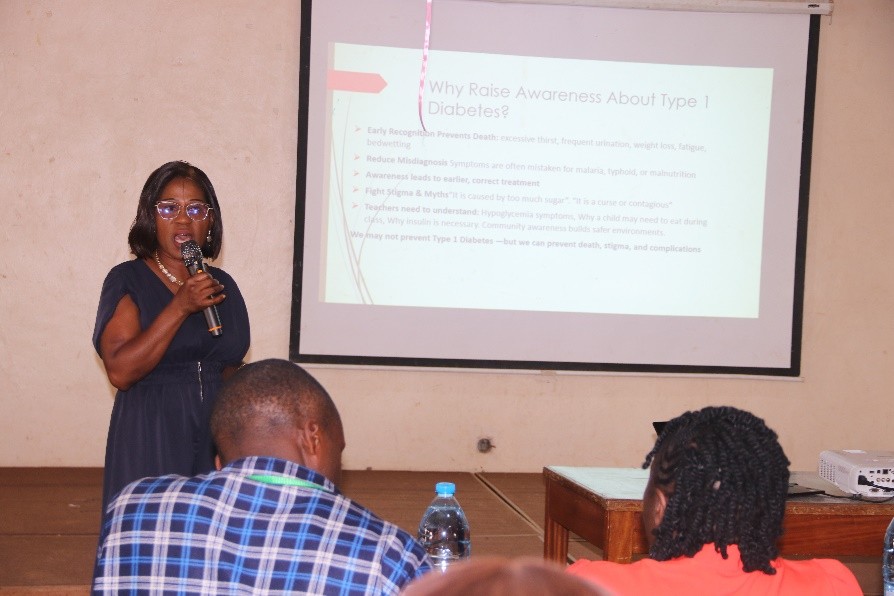
Special emphasis were placed on recognizing warning signs such as:

               •             Frequent urination

               •             Excessive thirst

               •             Unexplained weight loss

               •             Persistent fatigue

Participants were reminded that timely action can prevent severe complications and improve survival, particularly among children.

  • Addressing Myths and Reducing Stigma

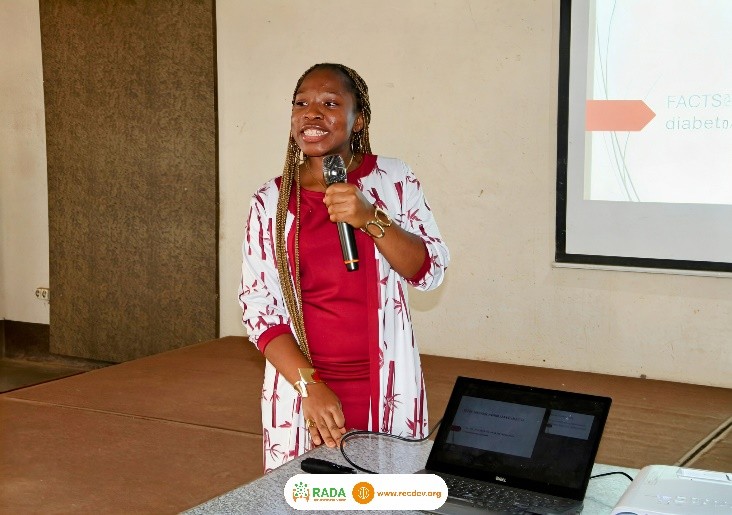
Module 2, led by Project Manager Moffo Anaisse, tackled common myths and misconceptions surrounding Type 1 Diabetes. Through interactive discussions, participants learned how to confidently debunk false information, reduce stigma, and promote accurate, life-saving messages within their communities.
Practical Strategies for Community Engagement

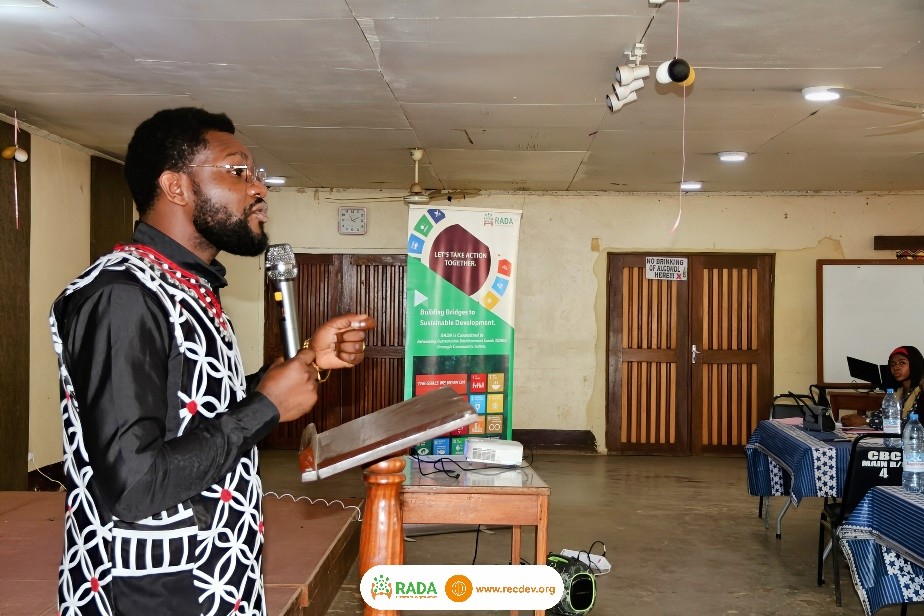
In another engaging session, Mr. Ferdinant Sonyuy guided participants through practical strategies for raising awareness on Type 1 Diabetes Mellitus. These included by;

•   Engaging schools and church

.• Collaborating with community leaders

  •  Working with policymakers

The message was clear: awareness leads to early diagnosis, prevents complications, and improves survival rates, especially among children.
Hands-On Demonstration for Effective Outreach

The day also featured a practical demonstration led by Project Officer Temboh Yannick on the effective use of RADA health promotion materials. Participants learned how to strategically use posters and stickers to strengthen community sensitization efforts and maximize outreach impact.

The session concluded with motivating closing remarks from the CEO, who thanked participants for their dedication, active participation, and commitment to transforming knowledge into community action
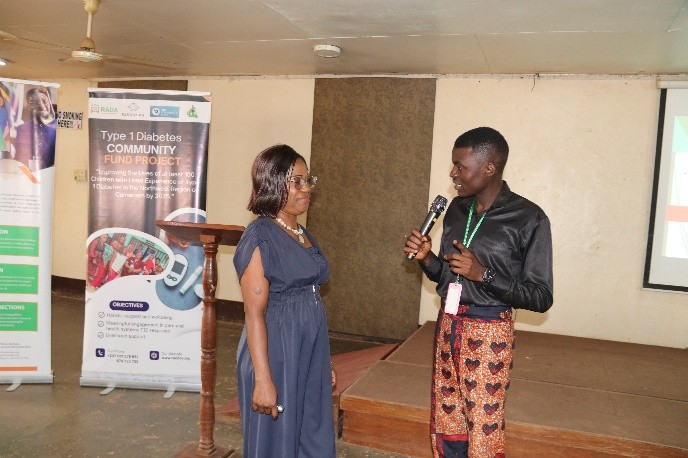
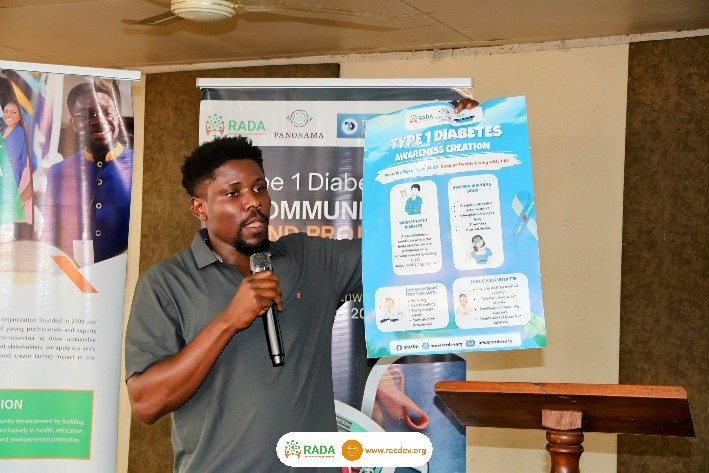
In Conclusion, Day 1 laid a strong foundation for building a network of informed advocates ready to advance Type 1 Diabetes awareness and key takeaways.

By: Bidmia Christabel and Merveille Njantio

International Day of Education under the theme “The Power of Youth in Co-creating Education,”

As the world marks the International Day of Education under the theme “The Power of Youth in Co-creating Education,” it is important to recognize that youth are not just beneficiaries of education systems but essential partners in shaping them. Africa is the youngest continent globally, with over 60% of its population under the age of 25 (African Development Bank, United Nations). In Cameroon, young people constitute over 70% of the population, with a median age of about 18 years, yet their voices remain largely absent from education policy, curriculum design, and governance processes (National Institute of Statistics, World Bank).

Empowering youth as co-creators of education means actively involving them in curriculum and activity design, policy and governance, pedagogical innovation, leadership, and advocacy. Guided by the principles of shared authority, agency, inclusion, and continuous engagement, meaningful youth participation leads to more relevant, equitable, and future-ready education systems. Evidence from UNESCO and the World Bank shows that education systems that engage learners in decision-making are more responsive and resilient. In Cameroon, across Africa, and globally, placing youth at the centre of co-creating education is not optional it is essential for sustainable development and inclusive growth.

Evaristus Yenkejim

“The power of youth in co-creating education” reminds us that young people are not just recipients of education, but active contributors in shaping learning systems that are inclusive, innovative, and relevant.

Let us listen to young voices, encourage their ideas, and work together to build an education system that truly reflects their needs and aspirations.

Tufoin Isabelle

“Education reaches its fullest power when youth are not just learners, but co-creators of the future.”

Marlen Wango

“Education is not built for youth, it is built with them. In curious questions, bold ideas and voices ready to lead; young people are not the future of learning, they are its co-creators, shaping education today.”

Nkfunji Juliette

“Education is not solely the responsibility of one person or particular stakeholders; it relies on everyone, this year’s theme reminds us of this fact.”

Merveille Ngueubou

Sustainable Agriculture: How Our Methods Are Transforming Local Farming

Discover how our innovative agricultural techniques are increasing yields while preserving the environment for future generations.

Empowering Youth Through Education: Our Latest Program Results

Our education initiative has helped over 500 youth gain valuable skills and certifications, opening doors to new opportunities.

RADA’s Health Initiative Reaches 10,000+ Community Members

Our comprehensive health program has successfully provided screenings, education, and support to over 10,000 individuals across rural communities, marking a significant milestone in our mission to improve community health outcomes.

Human Rights, Our Everyday Essentials” A Call to Action for Cameroon

“Human Rights, Our Everyday Essentials” A Call to Action for Cameroon

Human Rights Day Feature Image

December 10 marks the International Day of Human Rights, a moment to reaffirm our commitment to fundamental freedoms that belong to every person. This year’s theme, "Human Rights, Our Everyday Essentials", resonates with the undeniable reality of the global challenges. It is a powerful reminder that human rights are not abstract ideals reserved for grand declarations, but rather fundamental necessities that underpin our daily existence – the air we breathe, the water we drink, and the security we crave. For Cameroon, a nation navigating complex political landscapes and persistent human rights challenges, this theme is not just relevant but an urgent call to action for all.

The theme "Human Rights, Our Everyday Essentials" often highlights the contrast between aspirations and realities in Cameroon. While the nation strives for progress in its political, economic and social life, many of its citizens face daily struggles for basic rights. The upcoming 2025 local and parliamentary elections are keenly watched for their ability to deliver on the promise of inclusive governance. The right to participate in one's own government, to have one's voice heard and respected, is an everyday essential for any functioning democracy. When this right is compromised, or when the mechanisms for its exercise are perceived as exclusive, the very fabric of community trust begins to wear out. Ensuring transparency, fairness, and genuine representation in these electoral processes is not merely a political undertaking, but a fundamental human right essential for the well-being of every Cameroonian.

“When the right to safety, dignity, and participation is denied, the foundations of peace and community cohesion begin to collapse.”

The devastating Anglophone Armed Conflict tragically underscores how the denial of everyday essential human rights can lead to widespread suffering. For the communities enduring the conflict in the Northwest and Southwest regions, basic rights and necessities like safety, freedom from fear, and access to essential services have been brutally stripped away. This theme, "Human Rights, Our Everyday Essentials," brings attention to the daily injustices that civilians face, the right to life, which is restricted by violence; the right to physical integrity, which is infringed by assaults and mistreatment; the right to security, which is destroyed by fear and displacement; and the right to a dignified life, which is compromised by the devastation of infrastructure and means of subsistence.

The interconnectedness of human rights is undeniable. The right to education is an everyday essential for our children's futures. The right to healthcare is crucial for the well-being of our families. The right to a fair trial is vital for justice. The right to express oneself freely, without fear of reprisal, is the bedrock of a vibrant society. In Cameroon, ensuring these rights are not just on paper but actively realized in the daily lives of all citizens is the paramount challenge. It requires constant vigilance, unwavering advocacy, and a collective commitment from government, civil society, and every individual.

This International Human Rights Day, let us move beyond abstract pronouncements and recognize the tangible impact of human rights on our daily lives. For Cameroon, this means relentlessly pursuing peace, fostering inclusive governance, and holding accountable those who perpetrate violations. Let us commit to building a Cameroon where human rights are not a distant ideal, but the very foundation of our everyday lives.

Empowering Digital Safety from Violence: 16 Days of Activism against Gender-Based Violence.

Empowering Digital Safety from Violence: 16 Days of Activism against Gender-Based Violence

16 Days of Activism Feature Image

On December 5th, 2025, the Gender-Based Violence team of RADA hosted an awareness creation session as part of our campaign during the 16 Days of Activism Against Gender-Based Violence (GBV) campaign. The event, coordinated by GBV Lead Moffo Maurine, brought together RADA's staff and volunteers to raise awareness on digital safety and combat online violence against women and girls.

Understanding Digital Violence

In a thought-provoking presentation, Moses Kangong, highlighted the various forms of digital violence, including online harassment, cyberbullying, image abuse, digital dating abuse, and online grooming. He shed light on the devastating impacts of these actions, such as emotional distress, social exclusion, and educational disruptions. "The effects of digital violence can be long-lasting and far-reaching," Moses emphasized. "It's crucial that we take proactive steps to prevent online violence and support those affected."

The presentation also touched on the risks associated with digital violence, including low digital literacy, and the importance of prioritizing digital safety. Participants were encouraged to be mindful of their online behavior and to report any instances of online violence.

Digital Safety Awareness Photo 1 Digital Safety Awareness Photo 2 Digital Safety Awareness Photo 3

Key Takeaways

  • The importance of digital literacy in preventing online violence: "Digital literacy is not just about being tech-savvy; it's about being aware of the potential risks and taking steps to protect yourself online," Moses noted.
  • The need for a collective effort to combat digital violence: "We all have a role to play in creating a safer online environment," Hezelle, Head of Department, Sustainable Peace, emphasized. "Let's work together to promote digital safety and respect."
  • Strategies for promoting digital safety and respect online: Participants were encouraged to practice safe online behaviors, such as using strong passwords, being cautious when sharing personal information, and reporting online harassment.

A Call to Action

As we continue to navigate the digital age, we must prioritize digital safety and respect. Let us work together to create a safer online environment for all, particularly women and girls who are disproportionately affected by online violence. "We must take action to prevent online violence and support those affected.”

FOOD POLICY: COUNTERING INDUSTRY INTERFERENCE TOWARDS SECURING EVIDENCE-BASED CURBING of NCDS PREVALENCE IN CAMEROON

FOOD POLICY: COUNTERING INDUSTRY INTERFERENCE TOWARDS SECURING EVIDENCE-BASED CURBING of NCDS PREVALENCE IN CAMEROON

Food Policy Workshop Feature Image

On November 25 and 26, 2025, marked a very important step in RADA’s and its partners advocacy for the adoption of a healthy food policy in Cameroon. The session titled “Food Policy: Countering Industry Interference towards Securing Evidence-Based Curbing of NCDs Prevalence in Cameroon” was geared towards

  • Conducting a landscape analysis for industry interference on Front of Package Warning Labels (FOPWL) and Taxation Policies in Cameroon.
  • Conduct a political mapping of the industry
  • Contribute to the Industry interference response strategy

The host for the day was Ms. Chenwi Claris introduced the organization and handed the floor to Ferdinant M. Sonyuy to provide opening remarks. After welcoming the participants, he stated that the session would focus on political mapping and that it would be conducted with a strong understanding of policy advocacy to achieve the session's objectives.

With the aim for the session known to the participants, Ferdinant defined what NCDs are and their risk factors, as well as the global picture, the Cameroon situation. He went further to talk about what unhealthy diets are and their link to NCDs and the consequences, especially in children and young adults. In the next phase, he discussed mitigation strategies, including taxation, FoPWLs, and regulation of advertising, among others. There was also a presentation on what Front of Package Warning Labels (FoPWLs) are. the FoPWLs that RADA designed in collaboration with MINSANTE and the research methodology. The highlight of the policy pathways for both the FoPWLs and taxation of unhealthy diets was given. The objectives of the presentation were;

  • To understand the industry interference and the landscape of the FoPWLs and Taxation policies.
  • To conduct a political mapping of industry interference on the two food policies.
  • Contribute to the industry interference response strategy and collaboration
Workshop Photo 1 Workshop Photo 2

A family photo was taken, which was closely followed by a breakout session. The participants were split into two groups, which focused on FoPWLs and the Taxation of unhealthy Packaged Foods, respectively. They had to follow a presentation, then participate in the group work sessions.

Ferdinant presented on industry interference and mapping, where he defined industry interference and gave the reason for mapping, which is that we want to be 80% proactive towards interference and 20% reactive (20/80 rule). He also presented the advocacy strategy and the industry strategy for both the FoPLWs and the Taxation of Unhealthy Packaged Products. He also enumerated the various analyses that were done and their importance. Ferdinant also presented the industry landscape analysis, which started from the problem to the strategy.

“The point is to have a situation where industry is neutralized in the advocacy process, and the policies passed”. Mentioning the actors and actions, the results from the RADA Industry Interference Monitoring Response and Orientation Platform (RIIMROP) site on industry actions showed a high level of actions from the industry.

The four (4) elements of monitoring are the purpose of monitoring, what to monitor, how to monitor, and the tools and methodologies for monitoring. There are 3 levels of actors: multinational, business platforms, and alliances established by levels one and two. He presented an iceberg of industry, which included three parts, with the top being industry interference actions to oppose/influence policies, the food industry taxonomy was next under the water, and trends to achieve and ensure co-governance were the bottom of the iceberg. He spoke about political action, which was the main target of the working session. This process involves actions targeted at decision makers, policy processes, and opposition viewpoints to reduce or counter industry interference. So, there is a need to map out the process, identify the key decision makers, map key influencers and external stakeholders, and assess the decision makers, key influencers, and stakeholders.

Day 2 followed a similar pattern, as it was mostly characterized by group work, presentations, and recommendations to mitigate industry interference.

Overall, this 2-day workshop was a huge success, as the appraisals were positive and with key recommendations given to improve RADA’s advocacy for the adoption of healthy food policies in Cameroon. The workshop had over 10 participants in attendance, with representatives from the regional delegation of trade and mines, industry, and technological development, Civil society organizations, lawyers, Political Scientists, economists, and RADA.

AN ARTICLE FOR THE COMMEMORATION OF WORLD DIABETES DAY 2025

World Diabetes Day Feature Image

AN ARTICLE FOR THE COMMEMORATION OF WORLD DIABETES DAY 2025

Diabetes mellitus (DM) is one of the leading causes of global morbidity and mortality. It is manifested when the body cannot manufacture or utilise insulin. Millions of people with diabetes face daily challenges managing their condition in the workplace, including stigma, discrimination, and exclusion. This World Diabetes Day 2025, with the theme being Diabetes and Wellbeing, focused on the campaign slogan ‘Know more and do more for diabetes at work’

At RADA, we did a 05 days countdown from Monday, the 10th, till Friday, the 14th of November, on raising awareness on diabetes as a whole, the types, risks, and management techniques. On our last day, we conducted a video with the organisation's staff, focusing on Diabetes and the Workplace, and educating them on their role as staff employers or resource managers. The Regional Hospital Bamenda organized a program in commemoration of World Diabetes Day, and Moffo N. Anaisse, the program Manager for the Type 1 Diabetes Support Advocacy program, took part in it, where she prepared a speech and delivered it as follows;

WDD Photo 1 WDD Photo 2 WDD Photo 3

“I would like to start by asking a question for us all, and it goes thus: Did we ever stop to think at some point about a scenario where physicians and medical scientists never found out what diabetes was, not to even talk of its management? That would have been a tragedy, creating a tale of endless grief for humanity

On behalf of the President/CEO of the Reconciliation and Development Association, Mr. Mbiydzenuy Ferdinant, I am honoured to be here today, November 14, 2025, a day recognized globally as World Diabetes Day. This year’s theme, Diabetes and Wellbeing, aligns with the overall SDG 3 target 4 on health and well-being. Non-communicable diseases (NCDs), such as diabetes, certainly pose a significant challenge to maintaining the state of well-being. Organizing a two-day picnic of champions in Baffoussam for children with lived experience of TID was one of the events that this year's RADA, in collaboration with the Regional Hospital and the Banso Baptist Hospital, organized to boost the well-being of these children and their caregivers. Indeed, the effect was profound, and the atmosphere was filled with widespread smiles and joyful expressions of the children and their parents, 26 in number.

Collaboration remains critical in the region to support the livelihood and psychological well-being of people living with diabetes. We want to appreciate the Regional Delegate of Public Health, Dr Ambe Lionel, and the Director of the Regional Hospital, Dr. Denis Nsame, for their strong and positive collaboration with RADA. Also, Mme. Aliah Deslyn, the Site Coordinator for the CDiC, together with Mme. Nfor Claudette, the Focal Person for Diabetes and Hypertension, and Mme. Mah Anyangwe, the Clinical Psychologist, proved to be a great force of true collaboration. Thank you for your exceptional work and dedication to service, as it is indeed rare to find such. I promise you the world is a better place because of you, our employees, parents, brothers, sisters, and children now have better diabetes management thanks to your strong commitment. Health is wealth, and we must preserve it at all costs.”

The day of the program started with a diabetes walk to the hospital round about and back and continued with a warm welcome speech from the Director of the Hospital, Dr. Denis Nsame followed by a series of learning sessions that included: an explanation of the theme of the year; Diabetes and Wellbeing, a talk on Diabetes in children and education on psychosocial support and nutrition for diabetic patients.

Indeed, it was a day well spent celebrating World Diabetes Day.

In conclusion, there is an urgent need for collective action to combat the global diabetes epidemic through awareness, prevention, accessible care, and management. This fight against diabetes is a shared responsibility requiring the collaboration of individuals, families, healthcare professionals, governments, and communities as a whole to implement effective prevention and control strategies.

Prepared by: Moffo Annaise

When Alcohol Fuels the Fire: The Hidden Costs of Alcohol Consumption Among Cameroon’s Youths

When Alcohol Fuels the Fire — RADA
Opinion
Nov 2025

‘When Alcohol Fuels the Fire: The Hidden Costs of Alcohol Consumption Among Cameroon’s Youths’

Cameroon is facing a growing crisis as rising alcohol consumption among young people transitions from a casual pastime to a pressing national concern. What was once viewed as a “fun escape” is increasingly undermining communities, contributing to frustration, clouding judgment, and, in some instances, triggering cycles of violence.

Alcohol abuse is not merely an individual issue; it poses a significant societal challenge. Each bottle embodies untold stories of lost potential; students dropping out, young leaders losing their way, and communities fracturing under the weight of despair. The normalization of excessive drinking has fostered a dangerous illusion of control, eroding the very foundations of peace and progress.

As post-election tensions persist in various regions, alcohol often acts as a catalyst for unrest. The link between substance abuse and social instability demands urgent attention. To empower Cameroon’s youth as future leaders, safeguarding their mental clarity and decision-making is essential.

It is imperative to rethink our approach to alcohol culture. Collaboration among communities, educational institutions, and policymakers is crucial in raising awareness, facilitating open dialogues, and providing healthier outlets for coping, expression, and leadership.

Peace begins with a clear mind. Progress is built on sober choices.

#AlcoholAwareness #CameroonDecides #PeaceBuilding